Pentecost: When the Invisible Becomes Visible
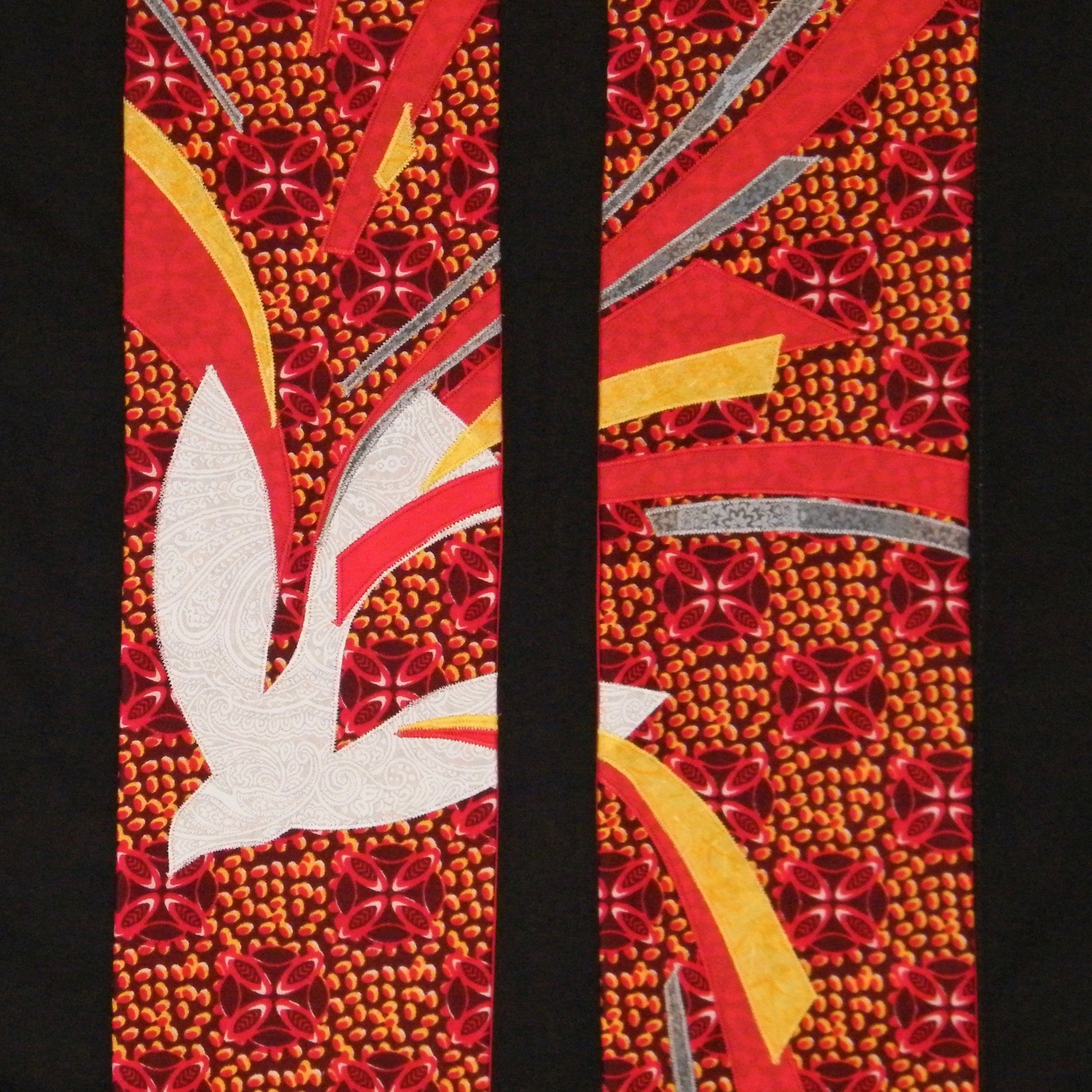
There are moments in the church year that feel quiet and reflective.
Pentecost is not one of them.
Pentecost arrives with movement,
a rush of wind,
the flicker of flame,
voices rising in languages once unknown.
It is a moment where something unseen becomes unmistakably present.
A Story That Still Feels Alive
The story of Pentecost, found in Acts 2, is surprisingly vivid.
A gathered group.
A sudden sound like rushing wind.
Tongues of fire rested on each person.
Voices speaking and being understood in ways that defy expectation.
It is a story of connection.
Barriers fall away.
Distance collapses.
People who could not understand one another could suddenly understand one another.
And at the center of it all is the Spirit: moving, stirring, creating something new.

Why Pentecost Is So Visual
Pentecost is one of the most sensory-rich moments in scripture.
Wind can be felt.
Fire can be seen.
Voices can be heard.
It makes sense, then, that the church has long leaned into visual language to celebrate this day.
Red fills the sanctuary.
Clergy wear stoles that move like flame.
Fabric drapes and lifts.
Light flickers.
These are not simply decorations. They are ways of helping people enter the story. Because sometimes we understand more deeply when we can see what we are hearing.

Symbols That Help Us Remember
Over time, a few symbols have become closely tied to Pentecost:
Flame — representing the presence and power of the Spirit
Wind — the breath of God, moving where it will
Dove — a sign of peace and the Spirit’s gentle presence
Color (Red) — energy, transformation, and life
These symbols matter because they travel with us. A red stole worn year after year. A piece of artwork that captures movement. A simple flame drawn by a child in Sunday school.
They become part of how we remember and recognize the Spirit’s work, not just in worship, but in everyday life.

The Spirit in Ordinary Time
What makes Pentecost especially meaningful is what comes after. The story doesn’t end with the dramatic moment. It continues in ordinary days.
In conversations that build understanding.
In acts of courage.
In communities learning how to care for one another in new ways.
Pentecost is not just about what happened then. It is about what is still happening now. The Spirit is still moving, often quietly, often unexpectedly.
Seeing What We Might Miss
At Carrot Top Studio, this is something we return to often: The idea that visual elements in worship are not just beautiful, they are formative. They help us notice. They help us remember. They give shape to something that can be difficult to name.
A stole becomes more than fabric.
A symbol becomes more than an image.
A color becomes more than a choice.
They become ways of seeing.
A Quiet Invitation
Pentecost reminds us that we are part of a story still unfolding. The Spirit did not arrive for a single moment. It continues to move through communities, through creativity, through small acts of faith lived out each day.
So perhaps the invitation is this:
To pay attention.
To notice where something is stirring.
To remain open to movement, even when it is subtle.
And if you’re thinking about how to visually tell the story of Pentecost in your own space, we’d love to hear. 🧡
P.S. — Our Pentecost downloads are a simple way to add a little spark to your space.