Holy Week is rich with meaning and also tender. Many congregations arrive carrying fatigue, grief, and deep hope all at once. One of the most helpful gifts we can offer as clergy, worship planners, and ministry leaders is a clear way to enter the story without needing a lot of explanation.
That’s where visual practices can serve so faithfully. They don’t replace scripture or preaching. They simply prepare the heart by giving the eyes something true to hold onto.
Below are several gentle, meaningful visual ideas for Holy Week: practices you can use in a sanctuary, chapel, classroom, or at home.

1) Keep the Palette Simple and Intentional
Holy Week benefits from restraint. Consider choosing a limited set of colors that match the days:
Palm Sunday: deep green + muted purple or red accents
Maundy Thursday: white (for communion) paired with plain linen textures
Good Friday: black, charcoal, or deep purple
Easter Vigil/Easter: white and gold, introduced slowly and intentionally
Even small shifts, such as cloth on a table, a banner removed, or candlelight added, help people feel the movement from procession to lament to resurrection.
2) Let “Less” Tell the Truth
A powerful Holy Week practice is un-adorning: removing rather than adding.
Clear a central table except for one object (a bowl, a stone, a simple cross).
Remove bright florals until Easter.
Leave some empty space intentionally because Holy Week includes absence, loss, and waiting.
People often remember what is missing.
Visual simplicity can help the congregation breathe and pay attention.
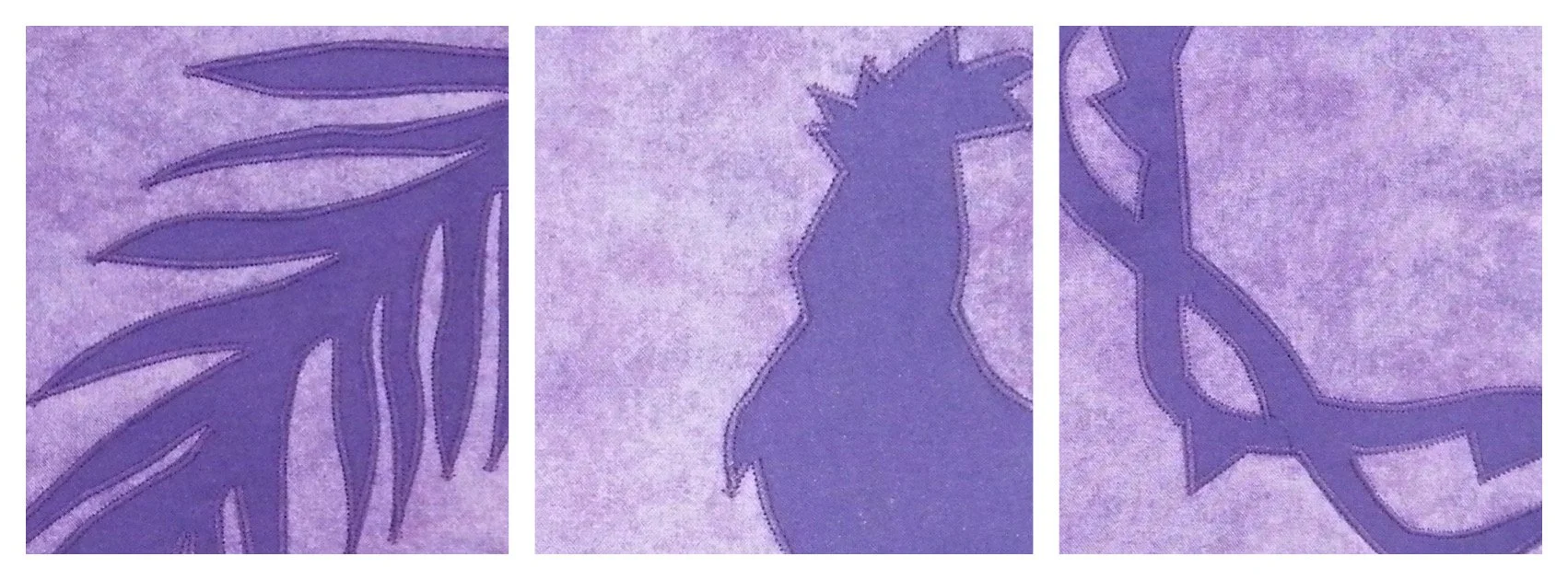
3) Choose One Symbol Per Day
Holy Week can become visually cluttered if we try to show everything at once. Instead, focus on one symbol each day:
Palm Branch (Palm Sunday): welcome, hosanna, the tension of expectation
Basin & Towel (Maundy Thursday): service, humility, love made tangible
Bread & Cup (Maundy Thursday): covenant, presence, communion
Cross (Good Friday): sacrifice, grief, mercy
Stone (Holy Saturday): silence, sealed spaces, waiting
Light (Easter): new life, dawn, resurrection
Place the symbol where people can see it clearly—front and center, not scattered.
4) Invite Participation Through a Visual Action
Simple embodied actions help children and adults connect more deeply:
Invite worshipers to place a stone in a bowl as a prayer for grief or burden.
Offer small pieces of paper for people to write a word they’re releasing, then place them in a basket.
Provide a “walking path” down the aisle with a few images or symbols placed at stations.
These practices don’t need to be complicated to be meaningful. The key is clarity and care.
5) Use Visual Prayer at Home
Holy Week is not only something we attend, but it’s also something we live. Encourage households to create a small Holy Week space:
A candle (light)
A small bowl of water (baptism/cleansing)
A stone (waiting/grief)
A branch (Palm Sunday)
A simple cloth that changes color as the week progresses
This is especially helpful for families, caregivers, and those unable to attend every service.
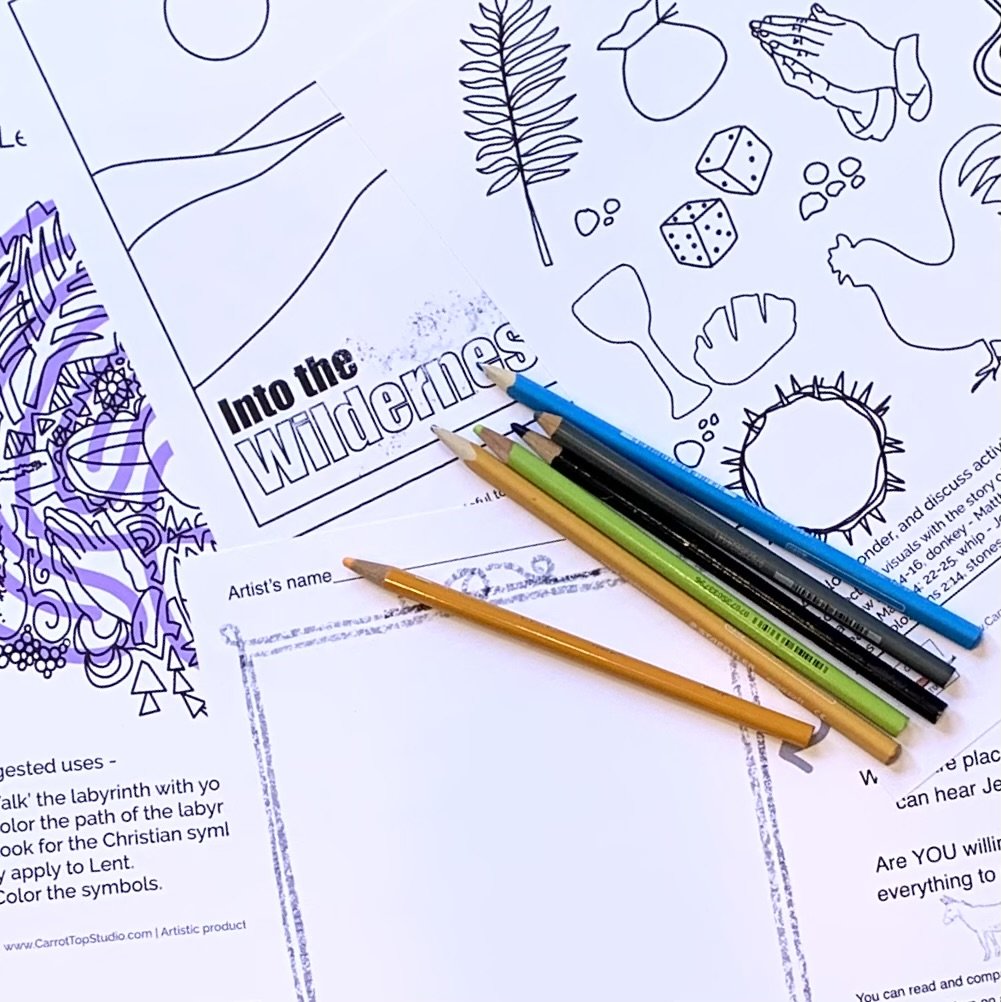
Carrot Top Studio Digital Downloads for Holy Week
If you’re looking for ready-to-use resources that support reflective, visual engagement, Carrot Top Studio offers a variety of printable PDF digital downloads that coordinate beautifully with Holy Week and the seasons that surround it. These include items like coloring pages for contemplative prayer, visual reflection prompts, and other creative tools designed for individuals, families, and faith communities.
Digital resources can be a gentle bridge, helping people pray with their hands, their eyes, and their attention, especially when words are hard to find.
A Final Thought
Holy Week asks us to slow down, to stay close to the story, and to resist rushing to Easter morning. Visual practices help us do that. They create a pathway for the heart, quietly guiding the congregation from Hosanna to lament to light.
May your Holy Week visuals be simple, honest, and full of presence, and may they help your community see what is true.