Pink is having a moment, again. Though often associated with softness or sweetness in our modern imagination, its history is far richer, more complex, and surprisingly bold. As we journey through Advent, pink takes on a particular luminosity, appearing just once in the liturgical calendar on Gaudete Sunday, the third Sunday of Advent, when we pause our waiting to rejoice.
But long before the church adopted pink as a symbol of joy, the color carried meaning across cultures, centuries, and artistic traditions. Today, let’s celebrate this radiant hue, one that quietly but powerfully connects creativity, culture, and spiritual joy.
A Brief History of Pink: From Power to Playfulness
Pink in the Ancient World
Pink pigments can be traced back to ancient Egypt and Crete, where natural dyes and crushed minerals created soft rose-colored paints for pottery, textiles, and murals. These early pinks symbolized life, vitality, and beauty, echoing the hues found in flowers, sunrise skies, and natural stone.

Pink in the Renaissance and Baroque Periods
Although not a dominant color during these eras, pink was often seen in religious paintings to communicate tenderness or divine love. Renaissance artists such as Raphael used variations of rose to highlight compassion, flesh tones, or scenes of holy intimacy.
*art - The Holy Family with the Infant Saint John the Baptist, or Madonna of the Rose, Raphael, Prado Museum
Pink in the 18th Century: A Color of Class and Elegance
Long before pink was stereotyped as “feminine,” it was actually a signifier of wealth and sophistication. European courts, particularly in France, embraced pink for both men and women. Pastels were fashionable, and pink appeared in silk coats, embroidered waistcoats, and aristocratic dresses.
It wasn’t until the 20th century that pink became culturally coded as feminine. Before that, it was simply joyful, lively, and elegant.

Modern Pink: Protest, Playfulness, and Possibility
Pink has also been used as a color of protest, unity, breast cancer awareness, and cultural pride. It carries both gentleness and boldness. Today, artists see pink as a color of invitation, welcoming, poetic, and energetically alive.
Pink in the Church: The Joy of Gaudete Sunday
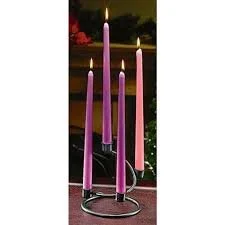
Within the rhythm of Advent, pink symbolizes a sudden burst of joy. After two weeks of deep, contemplative waiting marked by the purples and blues of longing, Gaudete Sunday, which means “Rejoice”, invites the church to pause and breathe in hope.
The pink candle on the Advent wreath flickers with light that says:
“Joy is coming. Christ is near. Hope is already breaking through.”
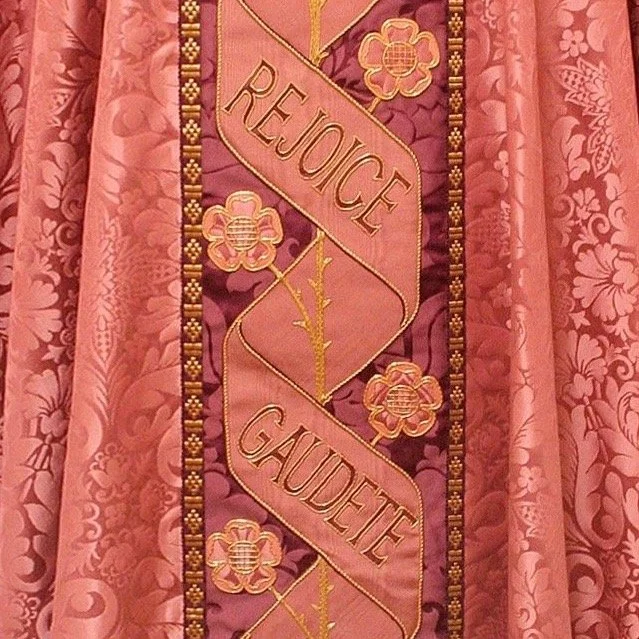
Pink clergy stoles for this Sunday embody that message visually. They become a wearable proclamation of joy, blending ancient symbolism with contemporary artistry. It’s a color that stands out, on purpose, because joy stands out.
Why Pink Matters in Art and Faith
Pink is a reminder that beauty often arrives in gentle, unexpected ways:
in the early blush of sunrise,
in the first blossoms of spring,
in the soft warmth of candlelight,
in the quiet joy of Advent’s midpoint.
It’s a color that reassures us joy doesn’t need to be loud to be real. It can be tender. Subtle. Hopeful.
And when used in worship, whether through stoles, banners, bulletins, or candles, pink helps the congregation feel that shift toward rejoicing. It’s color as invitation. Color as liturgy.
A Final Word: Rejoice in the Color That Rejoices
As you prepare for Gaudete Sunday and the rest of the Advent season, I hope you’ll notice where pink shows up around you, in nature, in art, in moments of kindness or delight. Let it remind you of the joy woven into God’s story, and into your own.
And if you’re looking for a stole or artistic resource that celebrates this beautiful hue, Carrot Top Studio is glad to journey with you through the season.
Joy is near.
Light is rising.
And pink continues to tell the story.

If you enjoy reflections like this—