
Seeing the Story: Public Domain Art for Advent & Christmas
One of the beautiful gifts of the Christian tradition is how artists across the centuries have used paint, line, color, and texture to tell the story of God with us. Long before many people could read Scripture, they saw it on altarpieces, in illuminated manuscripts, on chapel walls.
Even today, visuals remain a powerful way to immerse oneself in the story. A single image can slow us down, tenderize the heart, or help us notice something in the nativity narrative we’ve never seen before.
Below are several Advent and Christmas artworks that are completely public domain,free to use in personal devotion, ministry settings, worship bulletins, formation classes, or anywhere you hope to nurture holy attention.

“The Nativity” – Duccio di Buoninsegna (c. 1308–1311)
Italian, Medieval — Public Domain (Museo dell’Opera del Duomo)
A jewel of early Christian art, Duccio’s panel is filled with symbolic gestures and layered storytelling. Mary reclines at the center, the Christ child wrapped carefully, angels proclaiming, shepherds listening.
Reflection Questions:
What stands out to you first: Mary’s posture, the angels, or the quiet shepherds?
How does medieval art help you experience the Nativity differently than modern portrayals?
Where do you see humility in this scene?
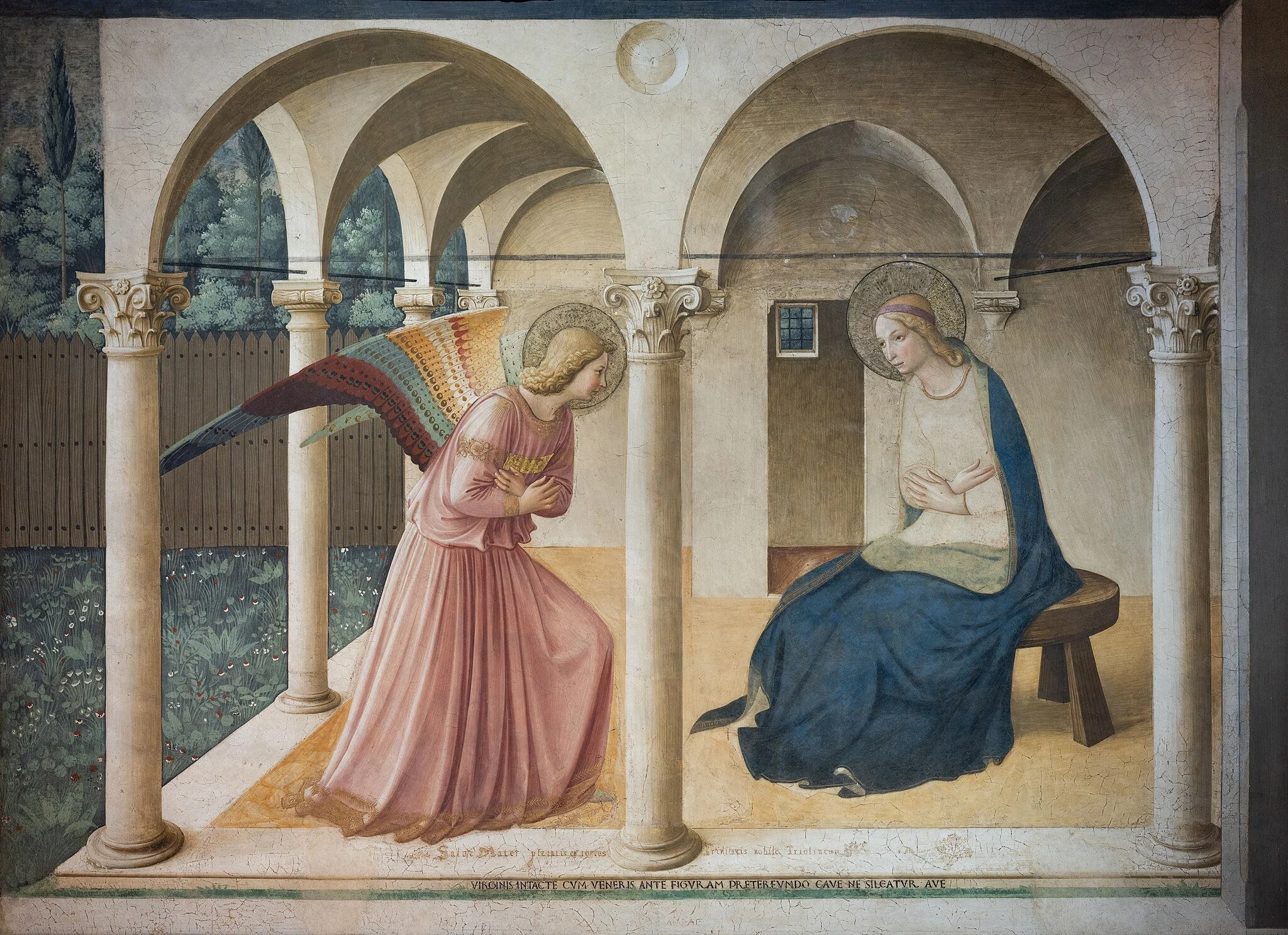
“The Annunciation” – Fra Angelico (c. 1437–1446)
Italian Renaissance — Public Domain (Museo di San Marco)
Fra Angelico paints the Annunciation as an encounter of pure reverence—quiet, glowing, almost breathless. The architecture, symbolism, and color deepen the sense of holy interruption.
Reflection Questions:
What do you imagine Mary felt in this moment of divine disruption?
How does the setting shape your understanding of the story?
Where might God be offering you a quiet invitation?
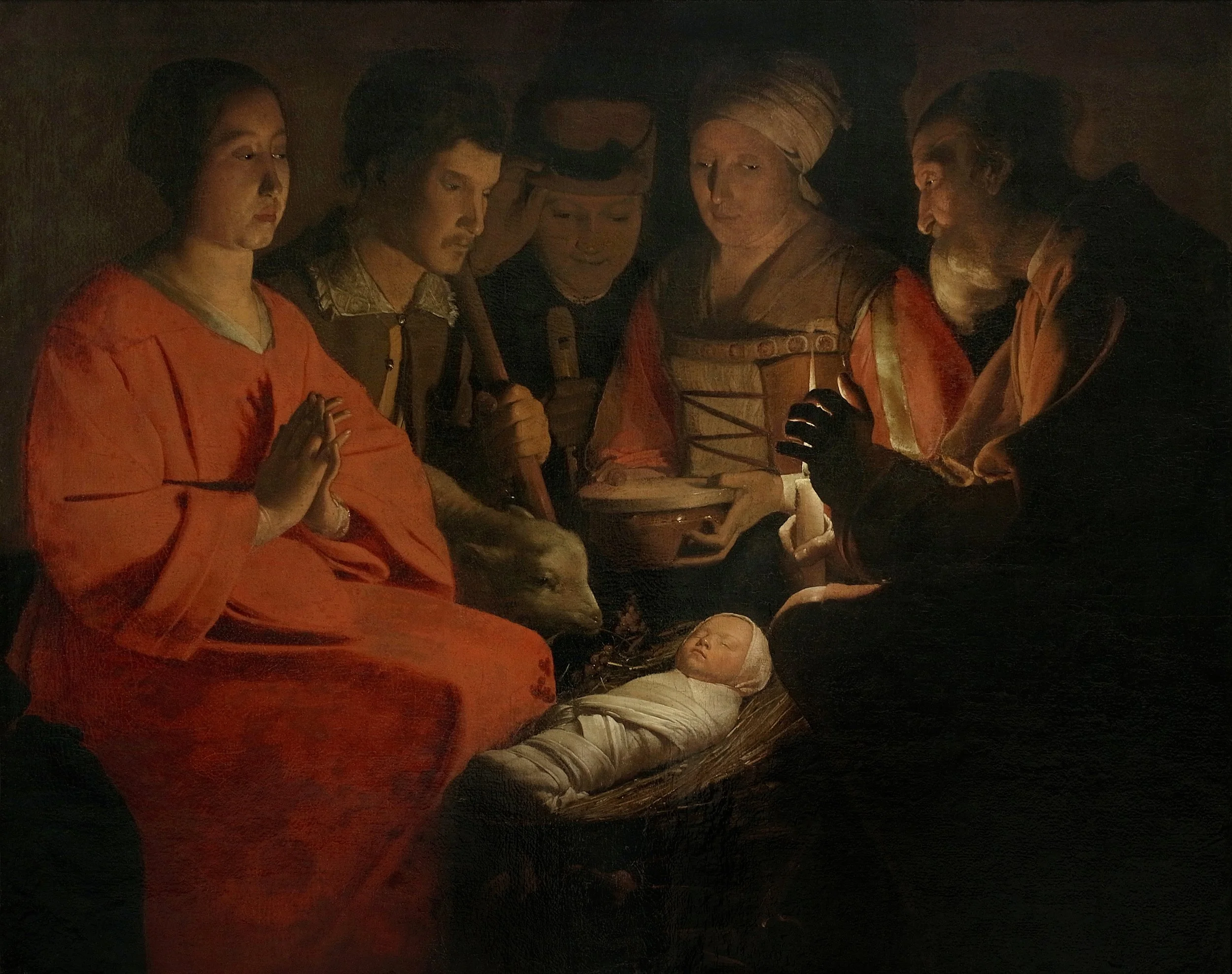
“The Adoration of the Shepherds” – Georges de La Tour (c. 1644)
French Baroque — Public Domain (Louvre)
La Tour’s candlelit scene draws the eye immediately to the Christ child. The shepherds lean in with wonder, lit by a warm, flickering glow. It’s incarnational theology in chiaroscuro (an effect of contrasted light and shadow created by light falling unevenly or from a particular direction on something.)
Reflection Questions:
What emotion does this lighting evoke in you?
Which figure do you relate to most—and why?
Where have you recently been surprised by holy tenderness?
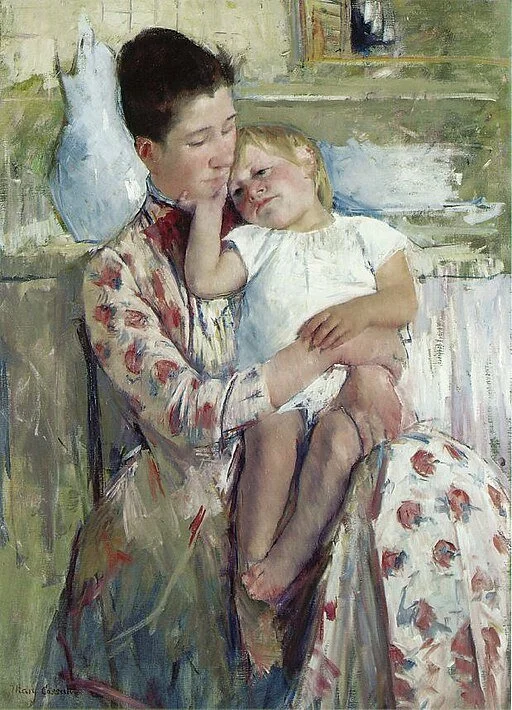
“Mother and Child” – Mary Cassatt (c. 1890–1891)
American Impressionism — Public Domain (Metropolitan Museum of Art)
Cassatt’s Madonna and Child is not strictly religious—yet its tenderness echoes centuries of iconography. An everyday mother and child become an echo of the sacred.
Reflection Questions:
How does this more modern image expand your idea of “holy family”?
In what ways does the incarnation sanctify the ordinary?
Where do you see glimpses of God in everyday love?
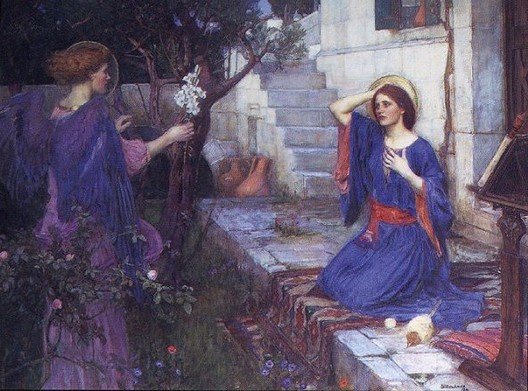
“The Annunciation” - John William Waterhouse, Public Domain
Waterhouse’s Annunciation is one of those rare paintings that feels both classical and quietly modern. Unlike many traditional depictions filled with grandeur, this scene leans into a tender stillness. Mary is young, almost fragile, sitting on the edge of her bed in a small, humble room. The angel approaches with reverence rather than spectacle. The whole painting hums with the tension of a moment that is both ordinary and utterly world-changing.
It’s an image that reminds us that so many of God’s invitations arrive quietly—asking for courage, openness, and trust before we fully understand what comes next. Waterhouse captures the sacred pause between hearing and saying yes, the space where faith begins to breathe.
Reflection Questions:
Mary receives world-shaping news in a simple, quiet space. Where in your own life does God meet you in the ordinary?
The painting captures the moment before Mary responds. What invitations—creative, spiritual, relational—are waiting for your “yes” right now?
Notice Mary’s posture: startled, yet attentive. How do you hold fear and faith together when something new is being asked of you?
Why Visuals Matter in Faith Formation
Art invites us into Scripture through a different door. It holds space for emotion, imagination, and contemplation. It helps children and adults alike see the story of Jesus in new ways—and it reminds us that the Incarnation is not an idea but an embodied reality.
Whether you use these images for worship, bulletins, teaching, or personal devotion, may they help you slow down and enter Advent and Christmas with fresh eyes.
If reflections like this make your heart do a little happy dance, come join us over on Substack—where the conversations are deeper, the stories are richer, and the creative fun never stops!


#/media/File:Fra_Angelico_-_Annunciation.jpg)
#/media/File:L'adoration_des_bergers.jpg)
