Before the First Stitch: How a Clergy Stole Begins
When you see a finished clergy stole, it's easy to notice the fabric, the colors, the symbols, and the stitching. But long before a stole reaches the sewing machine, another kind of work has already begun.
It starts with looking.
And listening.
And wondering what story the stole needs to tell.
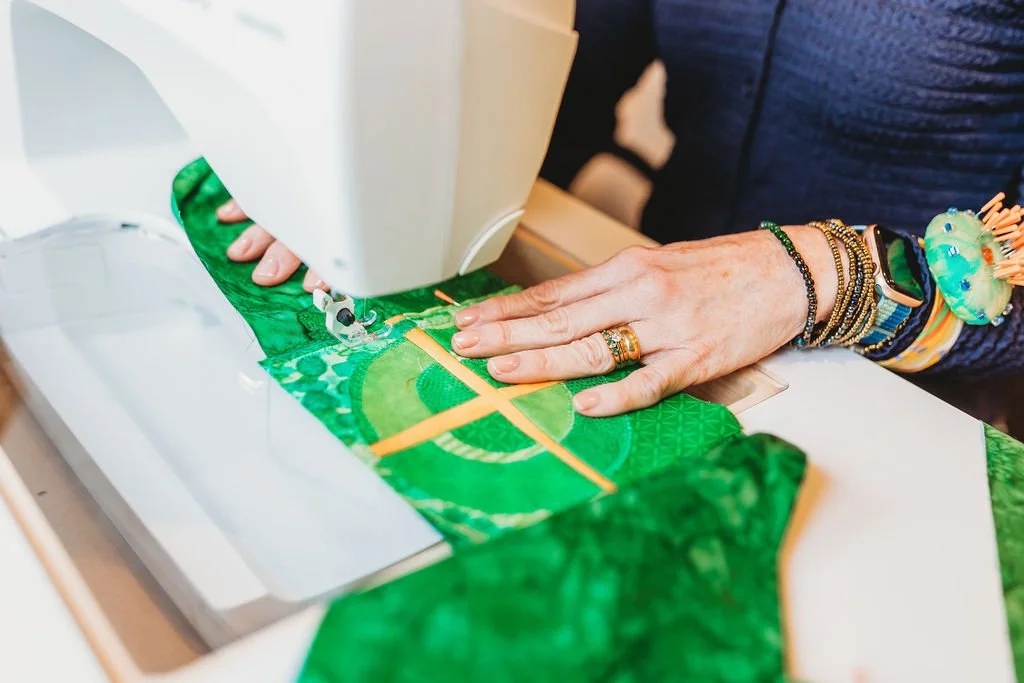
There is work to do before the stitching begins!
Inspiration Can Come From Almost Anywhere
There isn't one predictable starting point for a Carrot Top Studio stole. Inspiration has a habit of appearing in unexpected places.
Sometimes it begins with Scripture. A familiar passage suddenly brings an image to mind: a river, a seed, a flame, a tree, a table. Other times, a line from a hymn stays with me long after the music has ended and eventually finds its way into a design.
Libraries are another favorite source of inspiration. I love browsing the stacks, pulling out books on art, symbolism, architecture, textiles, nature, or church history simply because something catches my eye. One book leads to another, and before long an idea begins to form.
Museums offer yet another kind of visual vocabulary. A color combination in a centuries-old painting, the shape of a figure, or the way an artist suggests movement can spark an entirely different approach to a stole.
And then there is architecture. I am always looking up, down, and around at carved stone, stained glass, mosaics, ironwork, tile, arches, doors, and tiny decorative details someone else might walk right past. A pattern created hundreds of years ago can unexpectedly become the beginning of something new.
That's one of the things I love about being an artist: you never quite know when you're gathering material for a future piece.

From Inspiration to Sketch
Eventually, all that looking has to become something tangible.
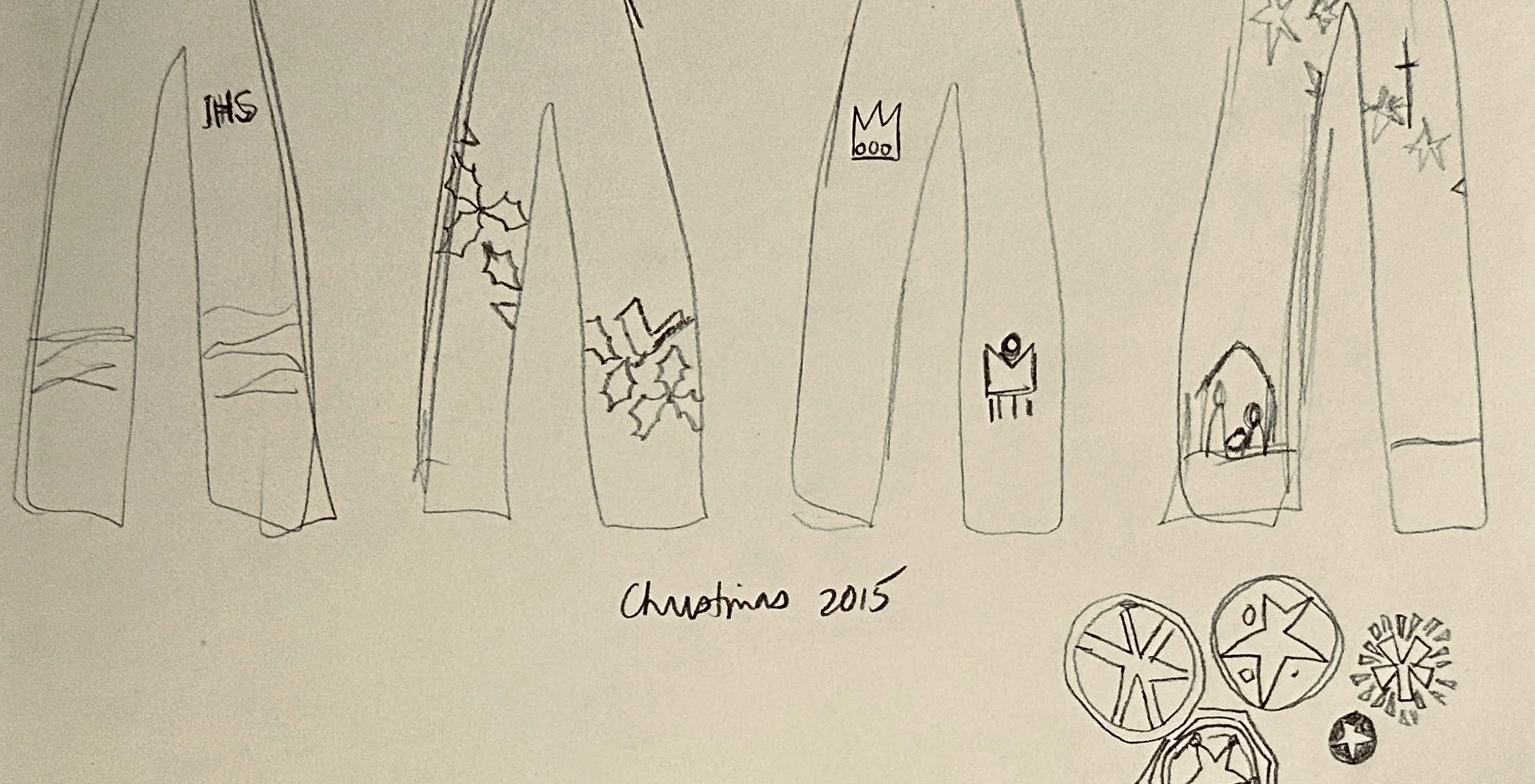
Often, that means sitting down with paper and pencil and beginning to sketch. At this stage, I'm thinking about more than individual images. I'm considering how the design will travel down the long, narrow shape of a stole. Where will the eye move? Where should there be quiet space? How will the symbols relate to one another? What happens when the stole is actually worn and moving?
The first sketch is rarely the final answer. Ideas are adjusted, simplified, rearranged, or abandoned altogether.
But not every stole begins on paper.
Sometimes we dive in.
Sketching With Scissors
Some designs seem to resist being worked out neatly on paper. For those, fabric becomes the sketchbook.
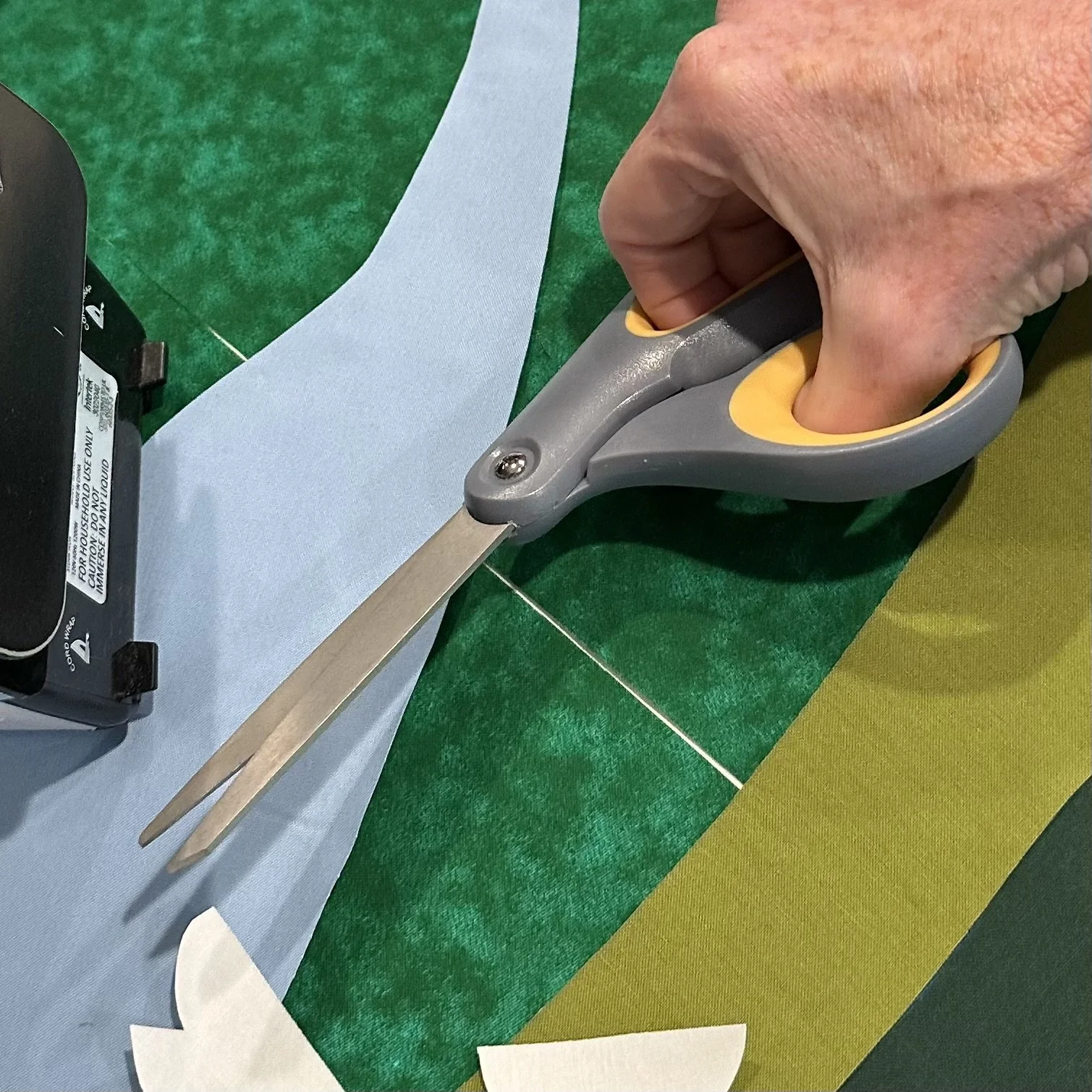
I'll pull fabrics from the shelves, spread them across the worktable, and begin cutting. One shape suggests another. A curve changes. A piece gets turned upside down. A different fabric suddenly makes the whole composition work.
I sometimes think of this as sketching with scissors.
Instead of deciding every detail before we begin, we allow the stole to tell us what it needs as it develops. Details are added, removed, layered, and shifted until the design begins to feel complete.
It is a much more intuitive process—and often one of my favorites.
When the Story Belongs to One Person
The process changes a little when we're creating a one-of-a-kind commissioned clergy stole.
In that case, the inspiration doesn't begin with something I've noticed.
It begins with listening to someone else's story.
A client might come to us with a favorite Scripture passage, meaningful symbols, particular colors, memories of a place, or an idea that's difficult to put into words. Sometimes they know exactly what they want. Sometimes they simply know what they want the stole to feel like.
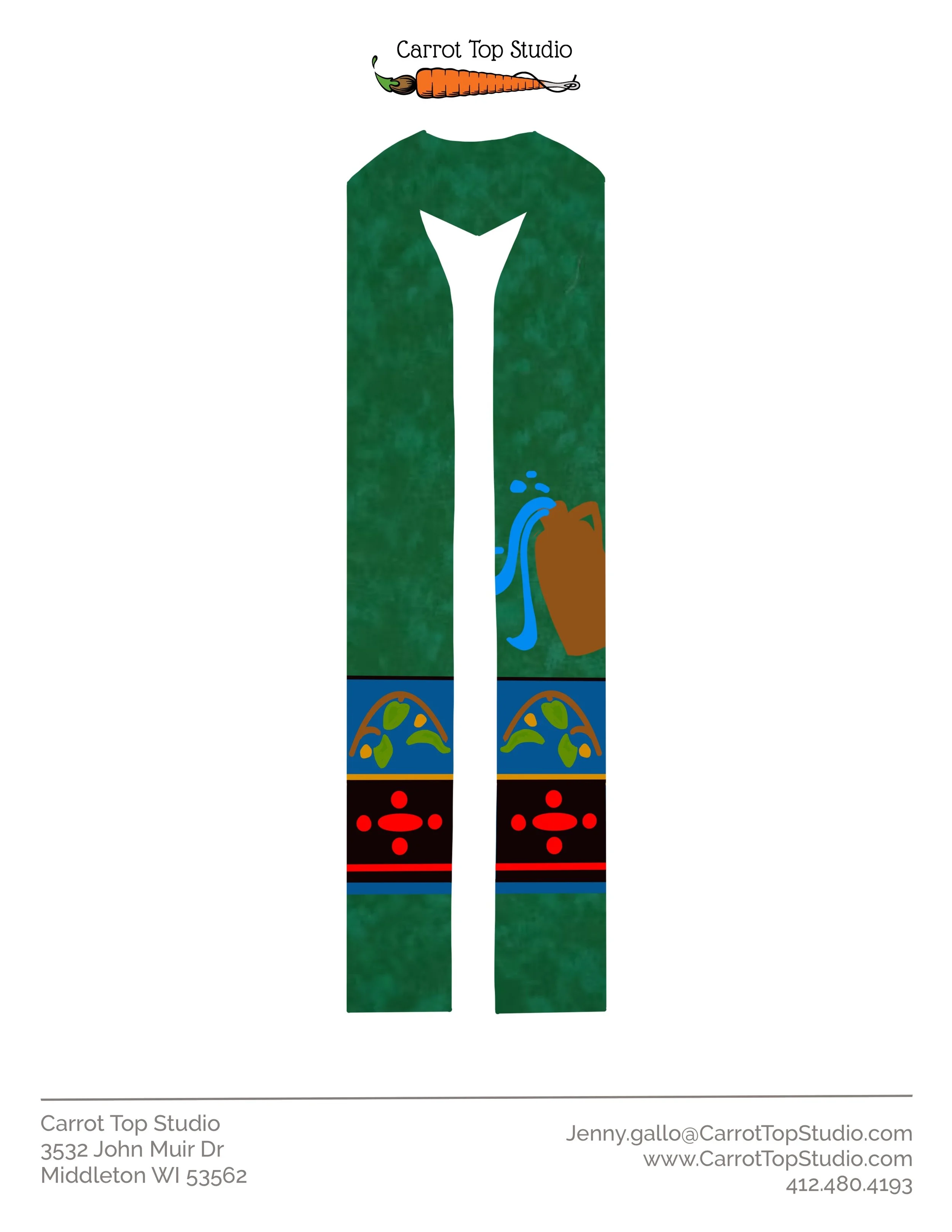
From there, I create a sketch or two, and we work back and forth until the design feels right. It becomes a collaboration: their ministry and story meeting my visual interpretation.
I particularly enjoy commissions because they remind me why symbols matter. A river isn't always simply a river. It might represent baptism, a particular place, a season of renewal, or a scripture that has accompanied someone throughout their ministry.
A tree might represent creation—or roots, family, strength, growth, or a congregation that has become home.
The most meaningful designs often hold several stories at once.
And Then We Sew
Only after all of this does the stole finally make its way to the sewing machine.
By then, a surprising amount has already happened.
A hymn has been remembered. A scripture considered. A museum visited. A library book opened. An architectural detail noticed. Fabrics auditioned. Sketches drawn or perhaps scissors picked up instead.
And slowly, an idea has become a story told in cloth.
That's the part of handmade work you can't always see in the finished piece. But I like to think it remains there somehow, tucked beneath every stitch.
Have a story you'd like to see told in a stole? Learn more about our one-of-a-kind custom stole process and how we can create a design especially for your ministry.