A tree is just a tree. Until it isn't.
A fish might simply be a fish. Water might be a river, a lake, or a glass sitting on the kitchen table. Bread is something we eat, and a candle is something we light.
But place those same images in a church, on a clergy stole, or within a piece of Christian art, and suddenly they may carry an entirely different meaning.
How does that happen? What makes an ordinary object become a Christian symbol?
It's a question I think about often at Carrot Top Studio, where much of my work involves translating scripture, faith, and the stories of the church into visual images.
A Symbol Is More Than What We See
Symbols work because they connect something visible with something we cannot necessarily see or touch. Consider water. We encounter it every day. We drink it, wash with it, and watch it fall from the sky. But within Christianity, water also reminds us of baptism, cleansing, renewal, and new life. Or there is bread. It nourishes our bodies, but in Christian worship it also points us toward communion, hospitality, and Jesus' words at the Last Supper.
The objects themselves haven't changed. What has changed is the story we associate with them. A Christian symbol gains meaning through scripture, tradition, worship, and the shared experiences of a community of faith. That's why understanding Christian symbols and their meanings can add so much to the way we experience church art and worship.
Five Familiar Images with Christian Meaning
Some of the most enduring Christian symbols come from the ordinary world around us. Here are five that frequently inspire the designs we create at Carrot Top Studio.

1. Trees: Growth, Strength, and Faithfulness
Throughout the Bible, trees appear as images of life, wisdom, strength, and spiritual growth. Psalm 1 describes a person rooted in God's teaching as a tree planted beside streams of water.
In liturgical art, a tree might remind us of God's sustaining presence or the importance of putting down deep roots in faith.
That's one reason trees and leaves are especially meaningful on green Ordinary Time clergy stoles, where the season emphasizes growth and faithful daily living.
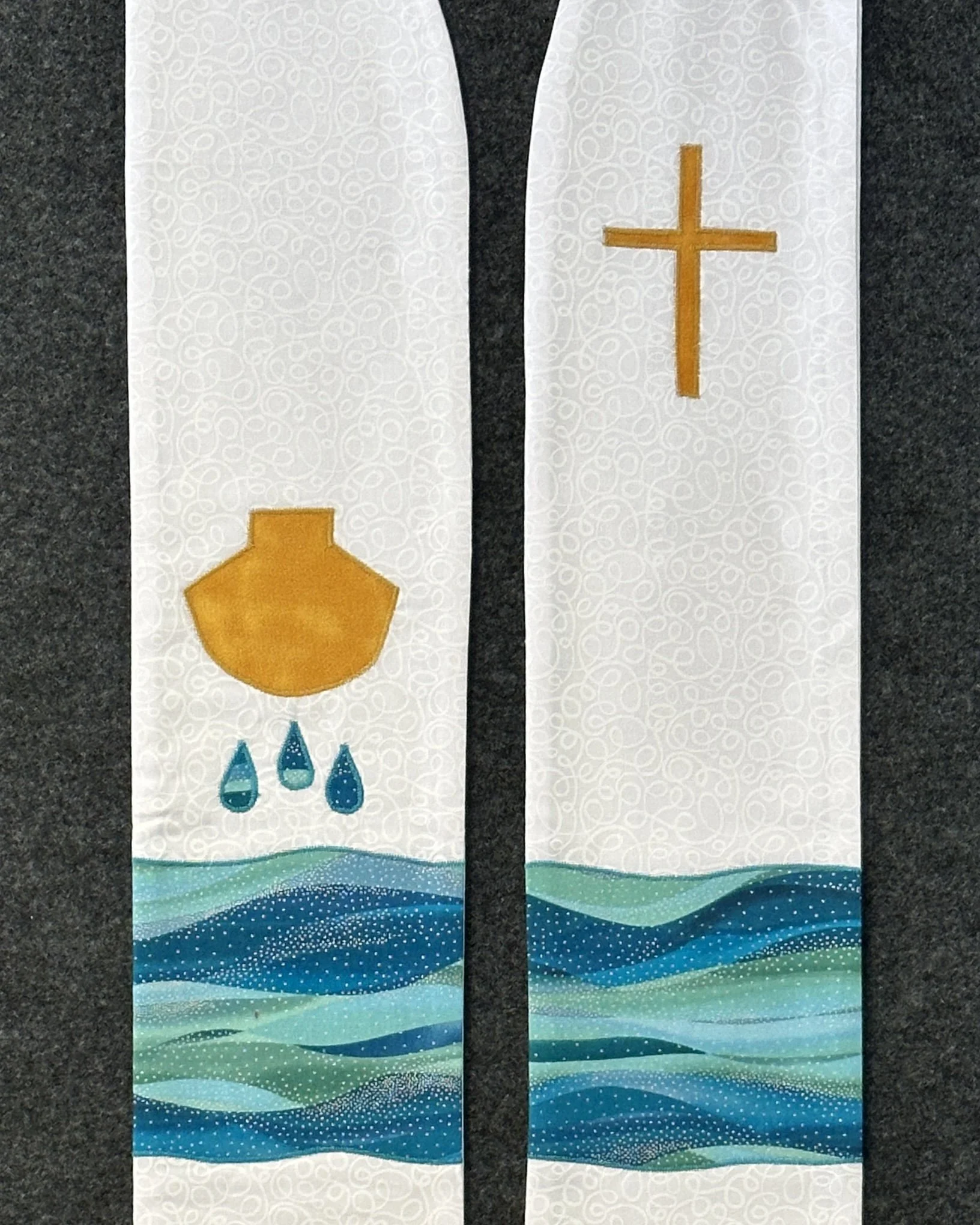
2. Water: Baptism, Renewal, and Grace
Water is one of Christianity's most recognizable symbols. From the waters of creation to Jesus' baptism in the Jordan River, it carries rich biblical meaning.
On a baptism stole, flowing water may point directly to the sacrament of baptism. On an Ordinary Time stole, those same flowing lines might suggest renewal, abundance, or God's ongoing presence.
One image can carry several meanings, depending on its context.

3. Fire: The Holy Spirit and Transformation
Fire appears throughout scripture, sometimes representing God's presence, guidance, or purification.
At Pentecost, the Holy Spirit comes upon the disciples with what appear to be tongues of fire. That story has made flames a familiar image in Pentecost stoles, ordination stoles, and other Christian worship art.
When designing with fire, I often think about movement. Fabric, color, and shape can suggest energy, wind, and transformation without requiring a literal illustration of a flame.

4. Fish: Faith and Following Jesus
The fish is one of the oldest recognizable Christian symbols. Early Christians used the fish, or ichthys, as an expression of faith in Jesus Christ.
It also reminds us of Jesus calling fishermen to become disciples and of the many Gospel stories involving fish, boats, and water.
A fish on a clergy stole might reference discipleship, evangelism, a particular scripture passage, or even a congregation's relationship with its local waterways.
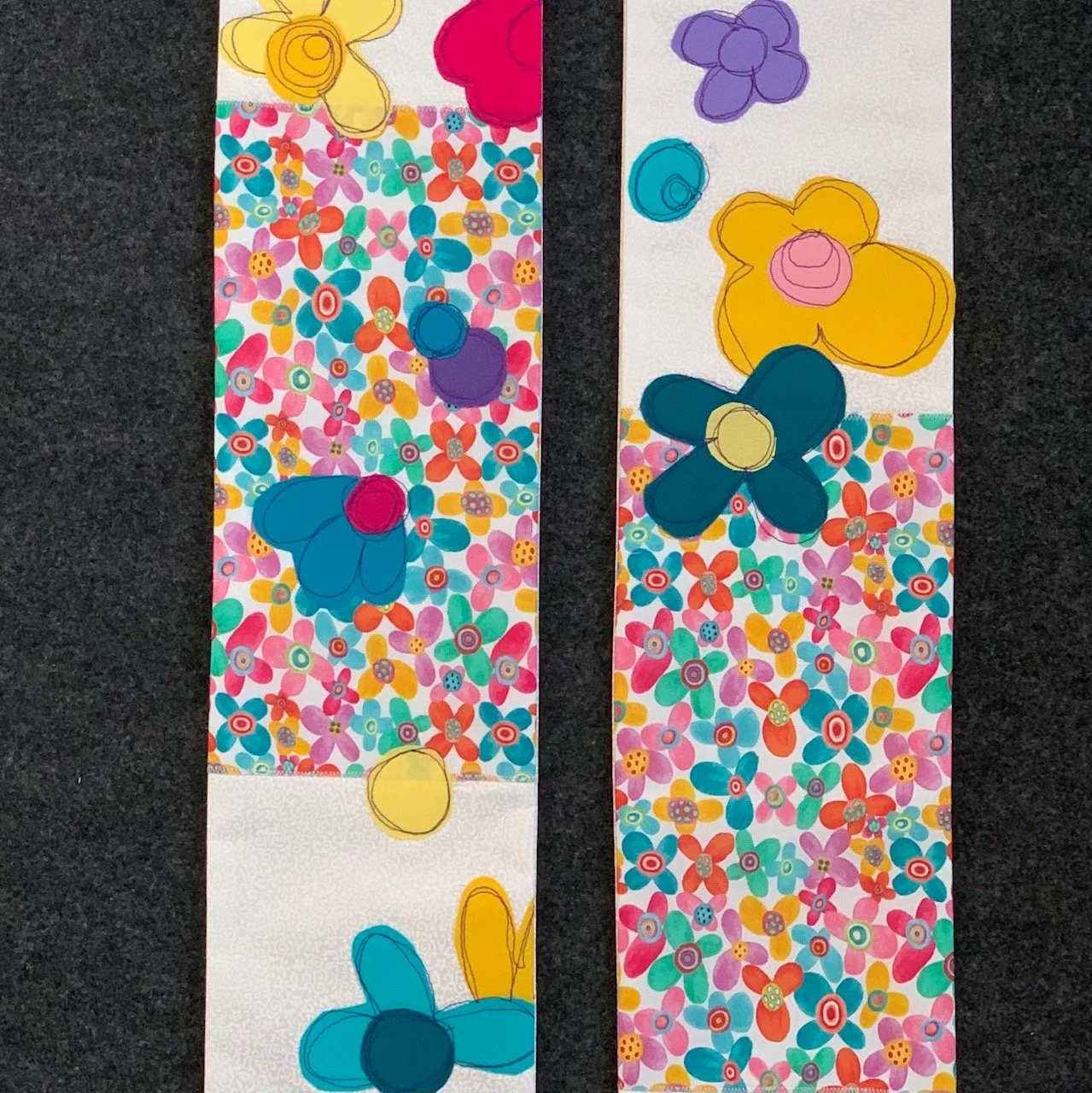
5. Flowers: New Life, Beauty, and Hope
Flowers are another wonderful example of how an ordinary image can become a meaningful Christian symbol.
Lilies are commonly associated with Easter and resurrection. Other flowers may suggest the beauty of creation, the fleeting nature of life, or the promise of renewal.
I especially enjoy using flowers in Ordinary Time and Easter clergy stole designs because they offer so many possibilities for color, shape, and storytelling. And sometimes a flower is chosen for an additional reason: it reminds someone of a beloved person, a special place, or a meaningful moment in ministry. That personal connection becomes another layer of the symbol's story.
Does Every Christian Symbol Have One Meaning?
Not necessarily. And that's part of what makes symbols so interesting.
A dove, for example, may represent the Holy Spirit because of the Gospel accounts of Jesus' baptism. It may also suggest peace, recalling the dove in the story of Noah. A circle might suggest eternity, wholeness, or God's unending love. A vine might remind us of Jesus' words in John 15 or of the relationship between Christ and the church.
Context matters.
The same image can communicate something different depending on the scripture being read, the season of the church year, the surrounding artwork, or the experience of the person looking at it.
This is also why I believe Christian symbols should be used thoughtfully rather than simply added as decoration.
Why Symbols Matter in Worship
Think about the visual images we encounter in a church: stained glass windows, banners, communion tables, baptismal fonts, paraments, and clergy stoles. Each has the potential to communicate something about the Christian faith before anyone speaks a word.
The colors of the liturgical year help us recognize the changing seasons. Symbols on a clergy stole might connect to the day's scripture reading. A banner might reinforce the theme of a sermon, while a piece of Christian art can invite someone to pause and reflect.
I've often said that symbols are sticky. We may not remember every word of a sermon, but we might remember the image of a tree with deep roots or a river flowing across a piece of fabric. Those images can stay with us, helping us recall the larger story.
That's the beauty of visual storytelling in worship.
The Stories Behind Carrot Top Studio
When I'm designing a handmade clergy stole, Christian art print, or creative faith resource, I don't begin by asking what image would look pretty.
I begin by asking, What story are we trying to tell?
Sometimes the answer comes from scripture. Sometimes it comes from a hymn, a familiar Christian tradition, or a conversation about someone's ministry. And sometimes an ordinary object, a seed, a leaf, a bird, or a bowl, becomes the starting point for something much larger.
After more than twenty years of designing liturgical art, I still find new ways to look at familiar symbols. That's one of the things that keeps this work interesting. The possibilities are nearly endless because the stories we carry are, too. And perhaps that's the most wonderful thing about Christian symbolism. It reminds us that ordinary things can point us toward extraordinary truths.
Explore the Stories Behind Our Art
At Carrot Top Studio, you'll find handmade clergy stoles for every season of the church year, along with Christian gifts, illustrated blessings, and creative worship resources. Each design begins with a story, and I'd love for you to explore the symbols and meanings woven throughout our collection.