How to Look at Art When You Don’t Know Anything About Art
“I don’t know anything about art.”
I’ve heard some version of that sentence countless times. Usually it’s followed by, “I just know what I like.” And I always want to say: That’s a perfectly good place to begin.
You don’t need an art history degree to stand in front of a painting and have a meaningful experience. You don’t need to know the artist’s biography, understand the movement it belongs to, or recognize every symbol. You don’t even have to decide whether the artwork is “good.”
You simply need to look.
As an artist and former art teacher, I’ve spent a lot of time looking at art and helping other people look at it, too. Whether you’re wandering through an art museum, encountering artwork in a church, or looking at a painting reproduced in a book, here are four simple questions that can help you begin.
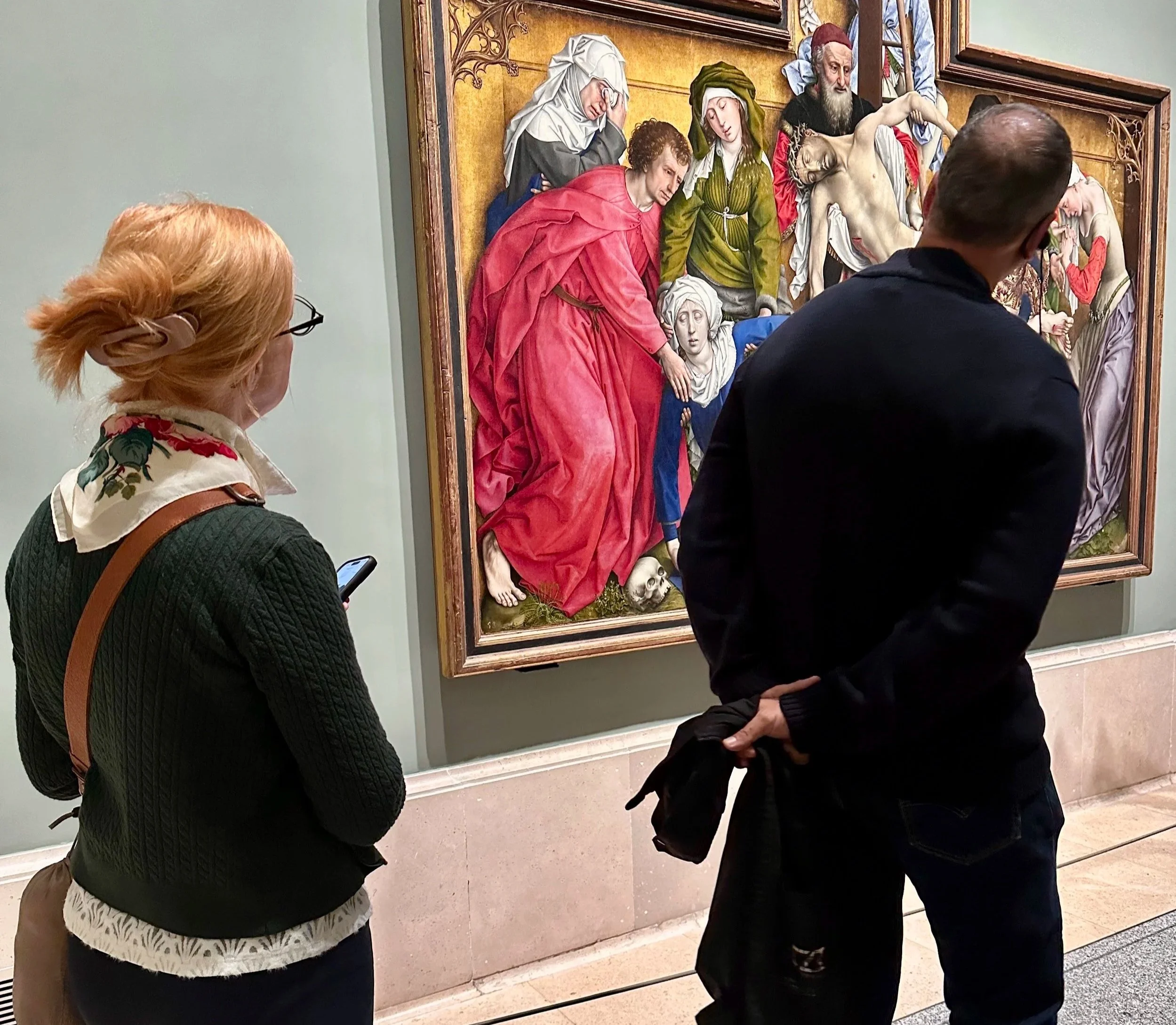
1. What Do You Notice?
Start with the easiest question of all. What do you see? Don’t worry about interpreting anything yet. Just notice.
Maybe it’s a bright patch of yellow in an otherwise dark painting. Perhaps it’s a person's hands. A tiny figure in the background. An unusual shape. The expression on someone's face. You might notice the colors first. Someone else might immediately notice the people. Neither of you is wrong.
This is one reason I love looking at art with other people. We can stand in front of the same painting and see completely different things. Take your time here. We are so accustomed to scrolling past images that simply standing still and looking can feel surprisingly unfamiliar.
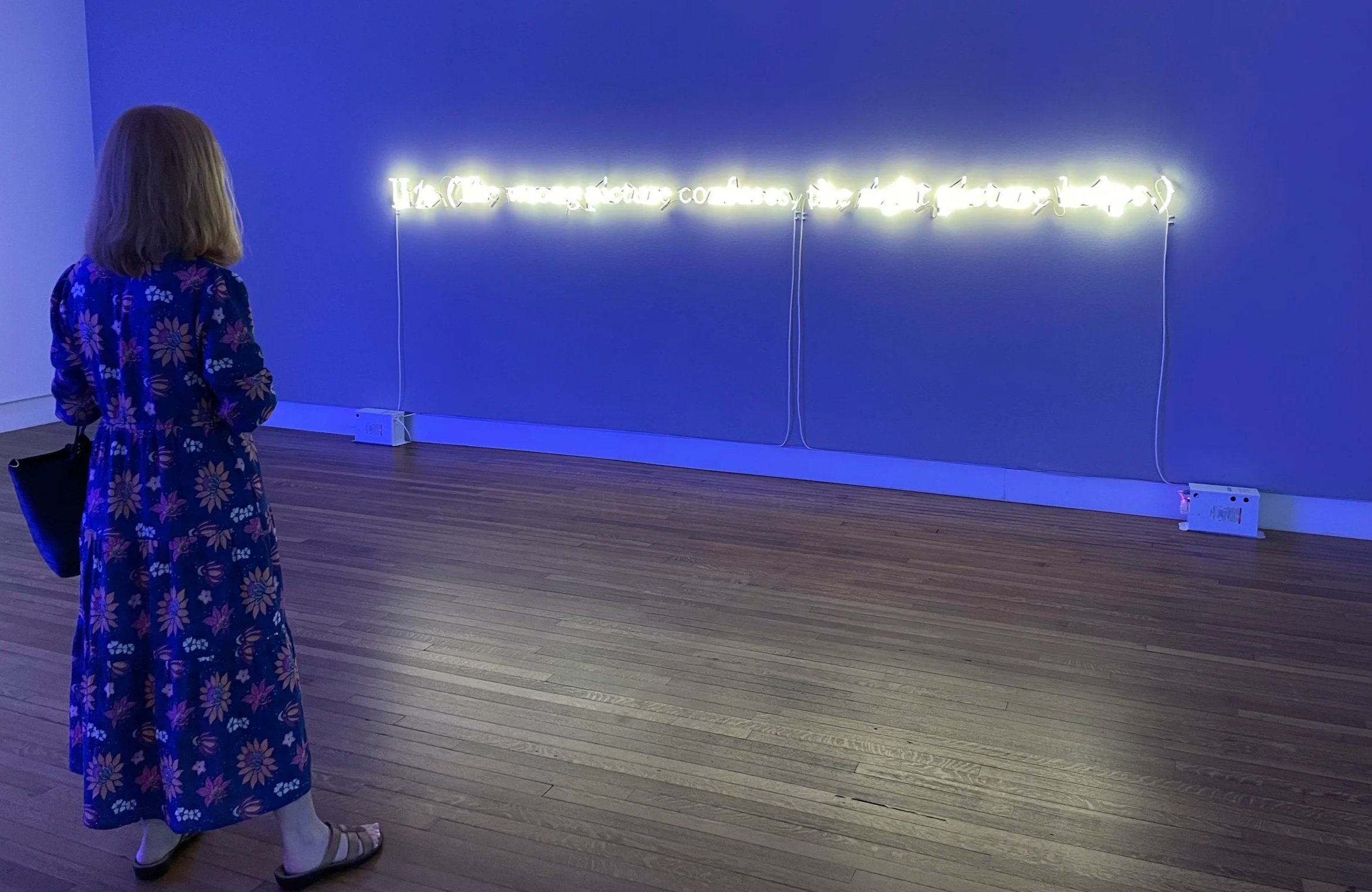
2. Where Does Your Eye Go?
Now pay attention to how your eyes move through the artwork. Where did you look first? Where did you look next?
Artists make choices that help guide your attention. A bright color against a dark background might pull your eye toward one figure. A line might lead you across a landscape. Light may illuminate one small part of an otherwise shadowy scene.
Sometimes the most interesting question is: Why did the artist want me to look there? You don't necessarily need to know the answer. Wondering about it is enough.
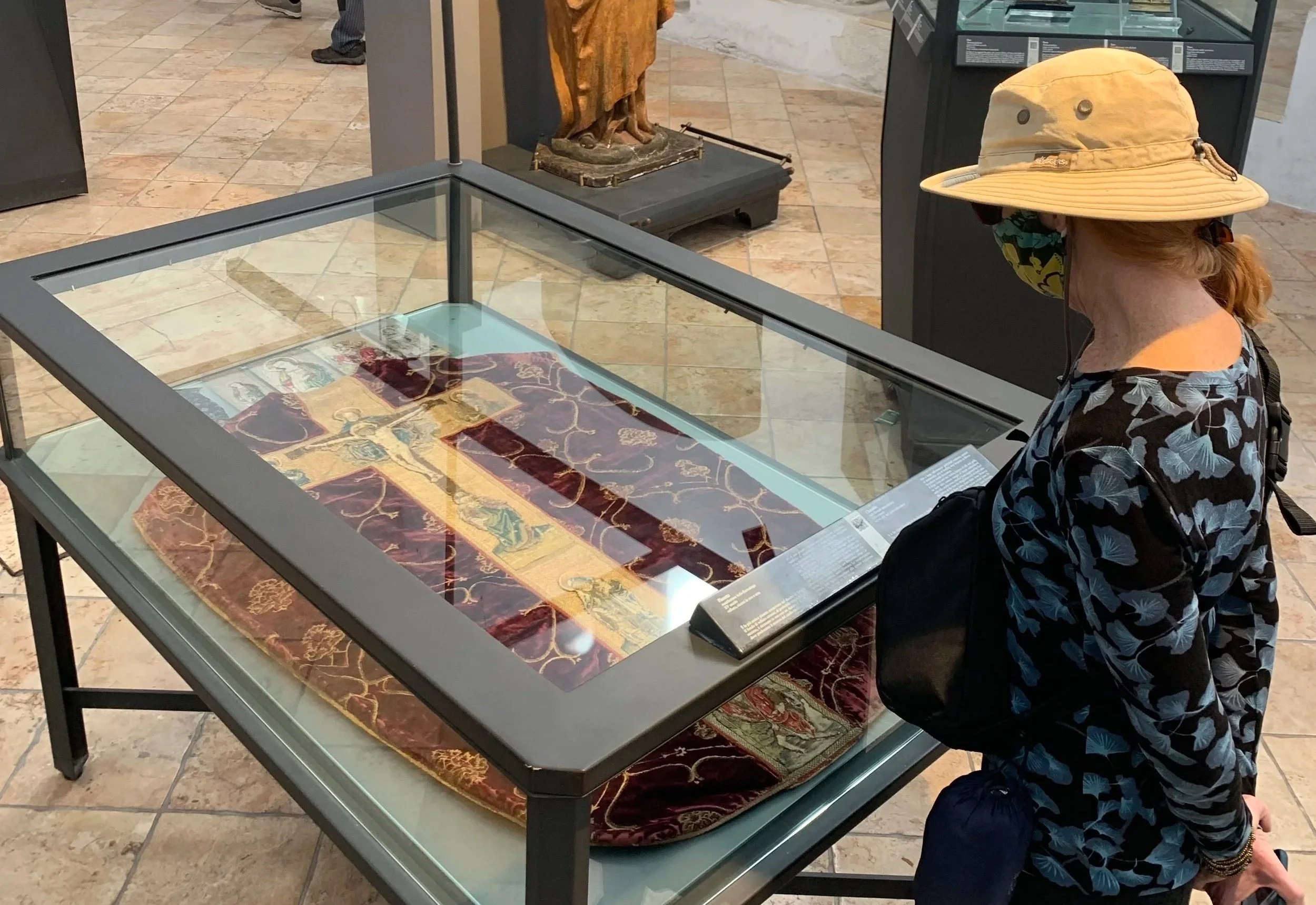
3. What Do You Wonder?
This may be my favorite question because there is no requirement that you know anything beforehand. What makes you curious?
Why did the artist choose those colors? Who is that person standing in the corner? Why does the sky look threatening? Why is one figure so much larger than everyone else? What happened five minutes before this scene? What might happen five minutes later? Questions slow us down. They move us from simply seeing an image to becoming curious about it. And curiosity is a wonderful doorway into art.
You may eventually want to read the museum label, look up the artist, or learn about the story depicted in the painting. But try wondering before you start researching. Give yourself the chance to encounter the art first.
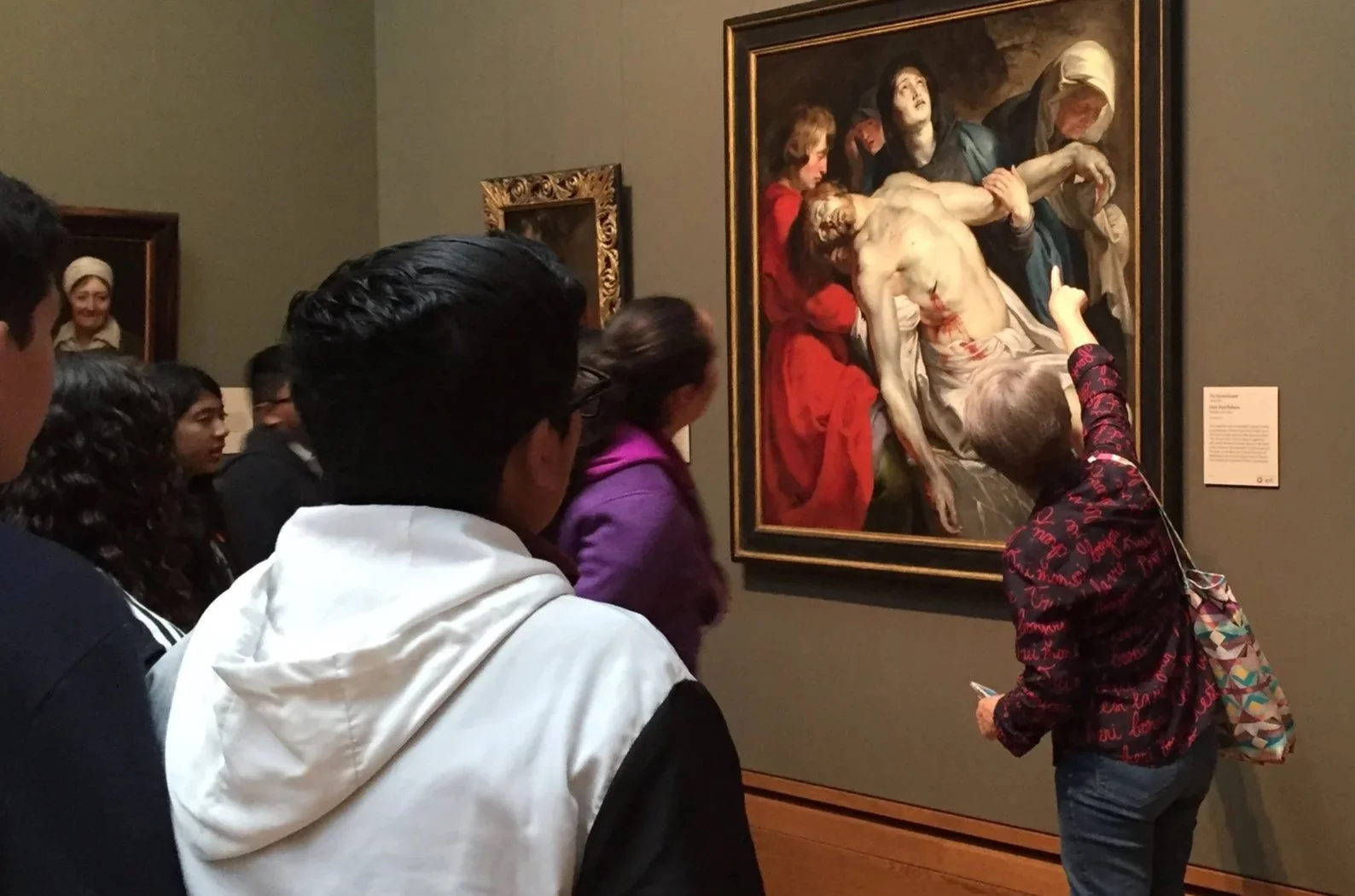
4. What Does It Make You Remember?
This is where looking at art becomes personal.
Does the landscape remind you of somewhere you've been?
Does a person's posture remind you of someone you know? Does a color bring back a childhood memory?
Does the artwork remind you of a scripture passage, hymn, prayer, or story?
Sometimes the connection will have absolutely nothing to do with what the artist intended. That's okay. Art has a remarkable ability to connect what we're seeing with things we've already carried with us.
For people of faith, this can also become a form of spiritual reflection. An image of water might call baptism to mind. A table might make us think about communion or hospitality. A garden might remind us of creation, growth, resurrection, or a particular passage of scripture.
The artwork gives us somewhere to begin, but we bring our own stories to the encounter.
Notice. Wonder. Remember.
You may have noticed that these questions sound familiar. Notice. Wonder. Remember. has become something of a guiding idea at Carrot Top Studio, and it reaches well beyond looking at paintings.
It works in a museum.
It works when looking at stained glass in a church.
It works when walking through a garden.
It works when studying the symbols on a clergy stole.
And, perhaps most importantly, it works in everyday life.
Pay attention. Be curious. Make connections. The next time you find yourself standing in front of a piece of art and thinking, I don't know anything about this, don't walk away. Start with one question:
What do I notice?
You already know enough to begin.