The mystical number six and its perfect expression, the hexagon, long having been of interest in architecture. Interestingly in Christian iconography, the hexagonal shape is also reminiscent of a casket, a small pointed boat-like structure in which to depart this life and journey toward the New Jerusalem. It symbolizes the burial of the old sinful self. For this reason, the vast majority of pulpits, from the middle ages to the nineteenth century, have six sides. They prepare us for the voyage.
Additionally six is the number of creation, and perfection, symbolizing divine power, majesty, wisdom, love, mercy, and justice. (George Ferguson, Signs and Symbols in Christian Art, 1954.) It was six days after which God rested. So the number six stands for things imperfect, corrupt, and wanting to be perfected. Again, the very shape for a pulpit.
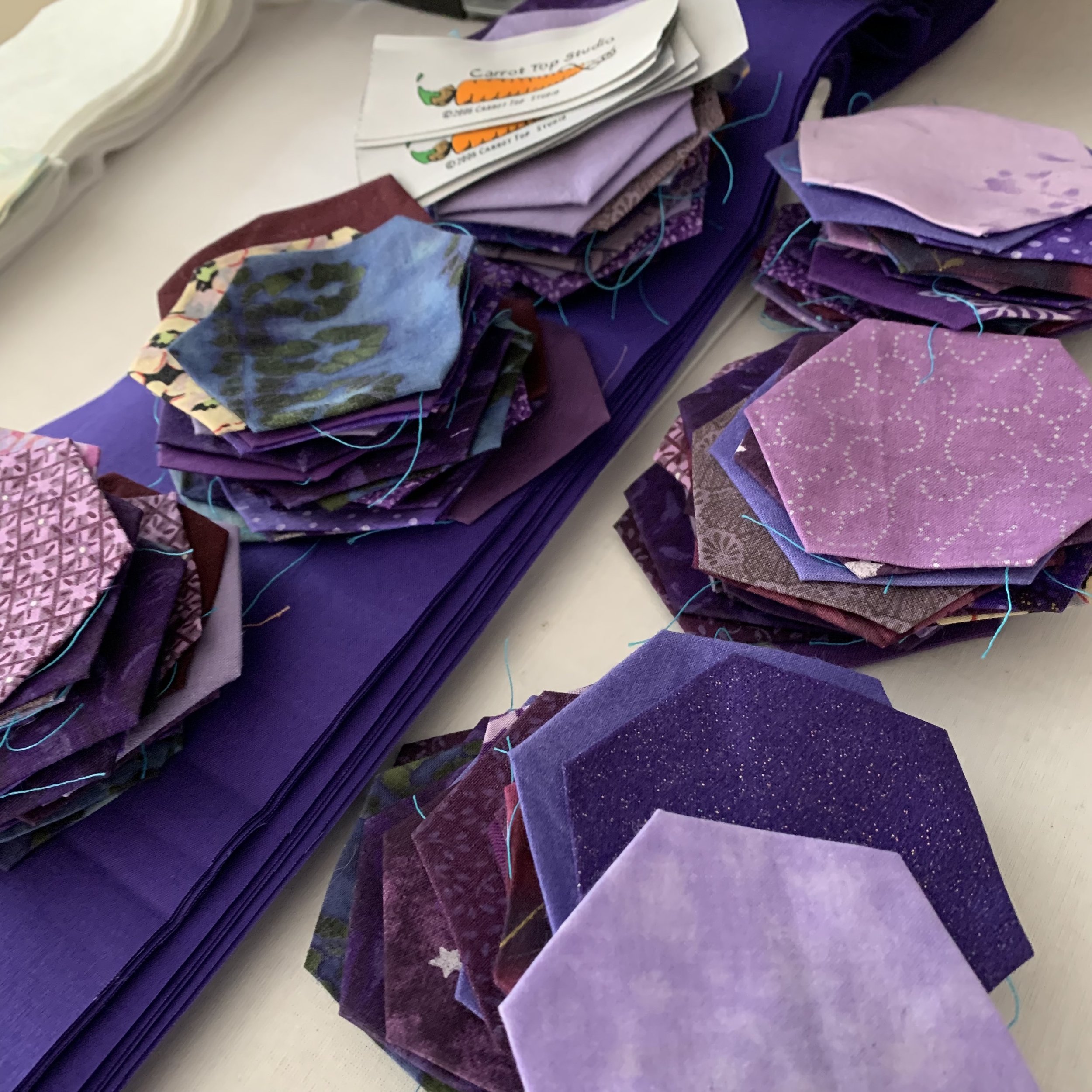
Years ago I started forming hexagons out of purple fabric scraps left from other projects. I would carry a little kit of fabric, paper hexagons, and needle and thread for basting the fabric around the paper whenever I traveled. There’s my confession that I’m a need to keep my hands busy kind of gal! This type of forming the shape around a template allows for the shape to be crisp and clean. When you are ready to appliqué the shape onto other fabric, you remove the paper template and go to work with your design.
Having stumbled upon the thoughts of the hexagon symbolically it was interesting to revisit the purple hexagons that had piled up over the years and incorporate them into stoles for the season of Lent. You may read the stole description and see more detail photos here.

Often I create a sketch first or work out a stole design with pattern pieces but, this stole is an example of having the symbols first and then figuring out what to do with them. The creative process can absolutely happen in many ways.
If you want to know when other new designs are released sign up for the periodic studio newsletter.