Seeing Lent with New Eyes: Art That Invites Children into the Story
Lent can feel abstract to children; forty days, repentance, preparation, waiting. Visual art has a remarkable way of grounding these big ideas, offering something concrete to look at, wonder about, and talk through together. When we place art in front of children, we give them permission to notice, ask questions, and engage the story of faith with their whole selves.
The following three works of public-domain art span different styles and centuries, yet each offers a gentle doorway into Lenten themes of humility, journey, mercy, and hope. These pieces work well for classrooms, bulletin covers, slides during worship, or small-group conversations with children and families.
_-_James_Tissot_-_overall.jpg)
Tissot’s watercolor illustrations are detailed, narrative-rich, and immediately accessible to children. In this scene, Jesus stands alone in the wilderness during his forty days of fasting. The landscape feels stark and quiet, emphasizing solitude and decision-making.
Questions to ask children:
What do you notice first about where Jesus is?
How do you think it feels to be in the wilderness?
When do you have to make hard choices, even when no one is watching?
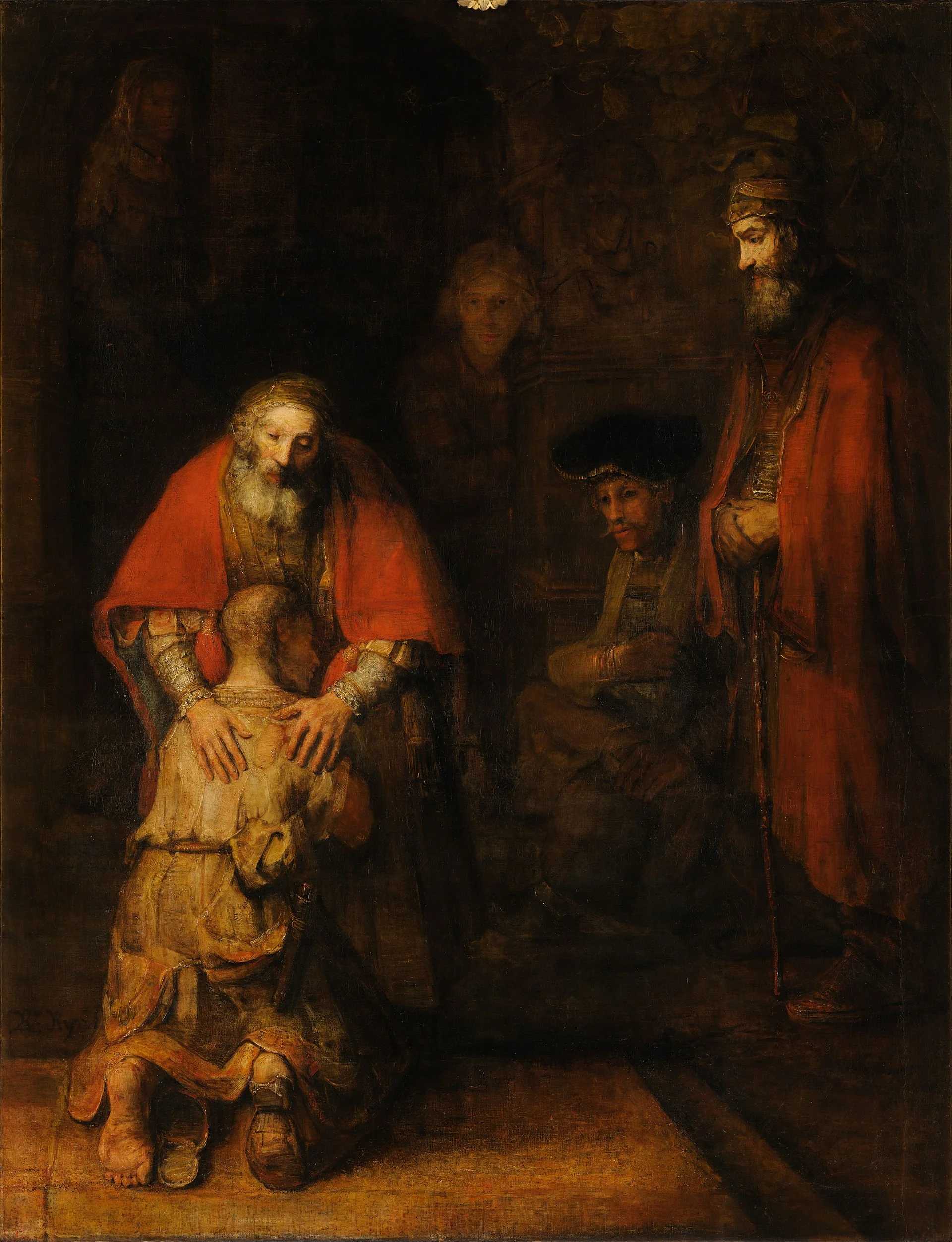
Though painted centuries ago, this image speaks powerfully to children through posture and touch. The father’s arms wrap around the kneeling son in a moment of forgiveness and welcome.
Questions to ask children:
Who do you think feels the strongest emotion in this picture?
What do you notice about the father’s hands?
How does it feel to be forgiven or welcomed back?
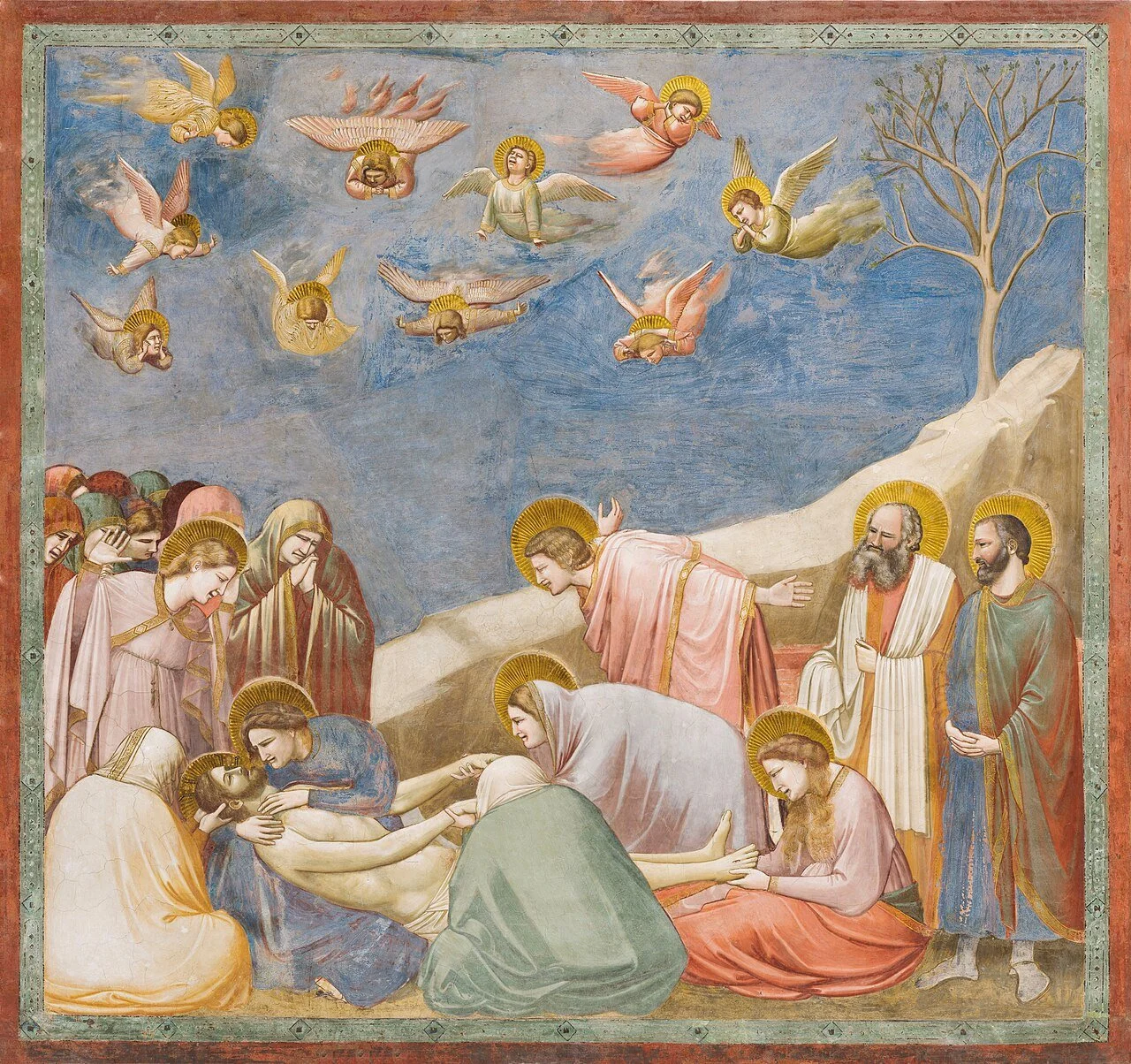
Giotto’s fresco is expressive without being overwhelming. The figures gathered around Jesus show sorrow through gesture and closeness rather than graphic detail, making it appropriate for older children during Lent.
Questions to ask children:
How can you tell the people are sad?
Why do you think they stayed close together?
What do we do when someone we love is hurting?
Why This Matters
Children are already skilled at reading images. They notice details adults often overlook. When we slow down and invite them into conversation with art, we help them build theological language through observation, empathy, and imagination. Art becomes a companion to scripture, not an explanation of it.
Using visual art during Lent doesn’t require expertise; it only requires curiosity. A single image, paired with open-ended questions, can help children see that Lent is not just about giving things up, but about learning how to notice, feel, and grow in faith.
If you’d like more ideas like this along with printable resources, visual prompts, and creative practices for the church year, you’re always welcome to join us on Substack, where we share expanded reflections and audio versions of many of our posts or, explore our library of digital resources.