Labor Day often arrives as a welcome long weekend, the unofficial end of summer, a final picnic, or a chance to rest before fall begins in earnest.
But perhaps it can also give us a reason to notice the work that fills ordinary days.
For that, I keep thinking about Jean-François Millet’s The Gleaners, painted in 1857.
The painting shows three women bent low in a harvested field, gathering the bits of grain left behind. There is nothing grand about their work. Millet hasn't painted a historic event or an important public figure. Instead, he has given an enormous canvas—and our attention—to three people doing physically demanding, everyday work.
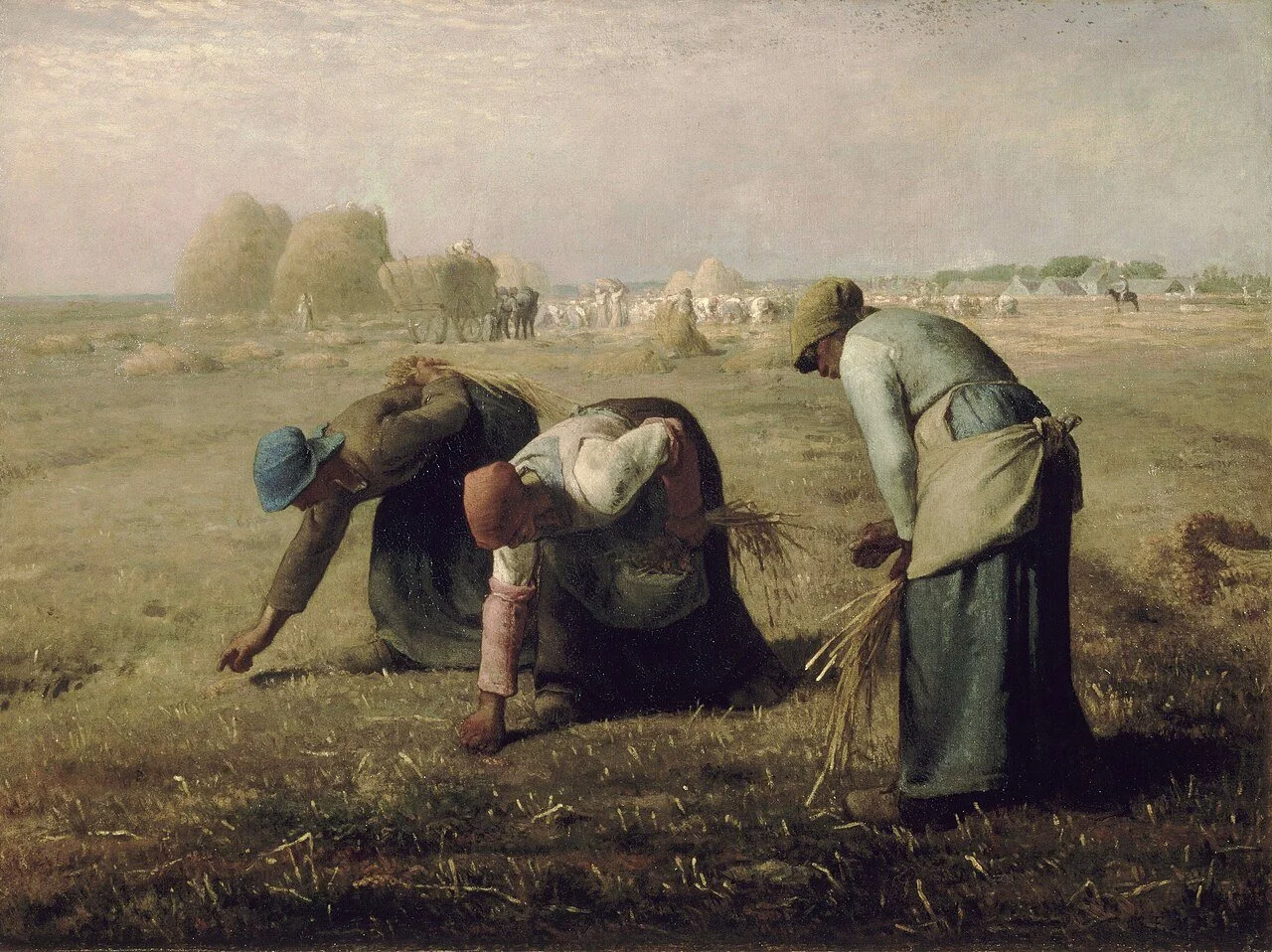
Jean-François Millet’s The Gleaners (1857), Musée d'Orsay
Take a Minute to Look
Before reading anything else about the painting, simply look. Notice the women's bodies. Their backs are bent toward the earth as they repeat the same motion: reach, gather, rise, and begin again.
Then look toward the distance. The harvest is abundant there. Haystacks rise from the field and people, carts, and animals are busy with the larger harvest. Against all that activity, the three women in the foreground feel both small and monumental.
Millet asks us to notice people whose labor might otherwise go unnoticed. That seems worth considering on Labor Day.
Work Worth Noticing
One of the things art can do beautifully is direct our attention. An artist makes a choice about what is worthy of being seen, and then invites us to look, too.
The Gleaners makes me think about all the ordinary work happening around us every day: the hands that prepare food, sew fabric, stock shelves, teach children, tend gardens, care for others, clean rooms, build things, repair things, and do countless jobs that make our communities function. Much of that work happens without applause. And yet it matters.
There's a connection here to the biblical practice of gleaning, too. In Leviticus and Deuteronomy, landowners are instructed not to harvest every last bit from their fields but to leave some behind for those in need. That makes Millet's painting more than an image of work. It can also invite us to think about provision, community, dignity, and our responsibility to one another.
Perhaps that's a fitting thought for Labor Day: notice the work, notice the worker, and remember that there is dignity in the ordinary things we do.
And maybe take a little time to rest from your own work today, too. 🧡