A Brief History of the Clergy Stole
The origins of the stole trace back to ancient Rome.
Historians believe the stole developed from a garment known as the orarium, a narrow strip of cloth worn around the neck or shoulders. Originally practical, it was used much like a scarf or hand cloth.
Over time, the church adopted and transformed this simple piece of fabric into a symbol of ministry.
By the fourth and fifth centuries, the stole had become associated with ordained leadership. It evolved from an everyday garment into a visible sign of service and responsibility.
Throughout the centuries, the stole became an important part of Christian worship traditions.
Different branches of the church developed their own customs:
Priests often wore stoles hanging straight down.
Deacons frequently wore them diagonally across the body.
Colors changed with the liturgical calendar.
Symbols and embroidery reflected theology, scripture, and local traditions.
What began as a practical cloth gradually became something much richer, a visual expression of vocation.
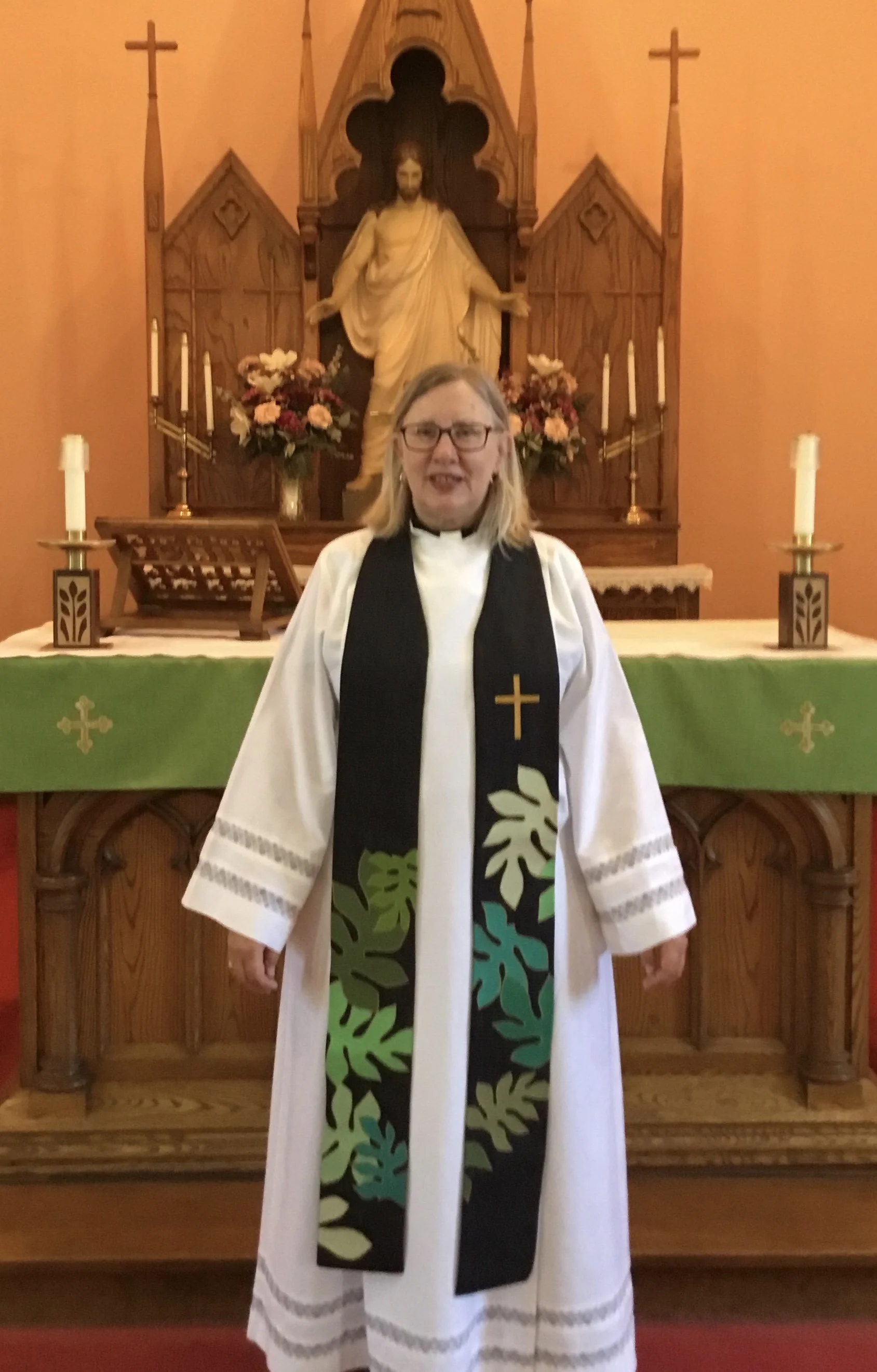
More Than Fabric
Today, a clergy stole is often one of the most personal items a pastor owns.
Unlike a robe that may be worn by many people over time, a stole often tells a specific story.
It may mark:
An ordination
A first call
A milestone anniversary
A congregation's identity
A beloved scripture passage
A particular ministry focus
Over years of baptisms, weddings, funerals, communion services, and ordinary Sundays, a stole gathers memories. It becomes part of the story of ministry itself.
Choosing a Stole: Start with Meaning
Because a stole is so personal, many clergy begin by considering symbols. Symbols help tell the story of faith visually. Some popular examples include:
Water — A reminder of baptism, renewal, and God's sustaining grace.
Wheat and Grapes — Symbols of communion, nourishment, and abundance.
Doves — Representing the Holy Spirit, peace, and God's presence.
Flames — Often associated with Pentecost and the movement of the Spirit.
Trees, Leaves, and Flowers — Images of growth, resurrection, creation, and spiritual flourishing.
Boats and Nets — Symbols connected to discipleship, calling, and the ministry of Jesus.
The best symbols are often the ones that resonate most deeply with the wearer and their ministry.

Choosing a Stole: Consider Color
For many clergy, color is the next consideration. Churches often follow the liturgical calendar, with different colors marking different seasons:
Green – Ordinary Time, growth, discipleship, and daily faithfulness.
Purple or Blue – Advent and Lent, seasons of preparation and reflection.
White or Gold – Christmas, Easter, baptisms, weddings, and celebrations.
Red – Pentecost, ordinations, confirmations, and the Holy Spirit.
Some clergy also choose specialty stoles for healing services, chaplaincy work, celebrations, or specific ministry contexts. Color helps communicate the season before a single word is spoken.
Choosing a Stole: Finding the Right Length
One of the most practical and most frequently asked questions is: "What length should I order?"
The answer depends on both height and personal preference. Some clergy prefer a stole that falls well below the robe. Others prefer a shorter, more contemporary appearance.
A few things to consider:
Your height
Whether you typically wear a robe
The style of your worship space
Personal comfort and movement (especially consider whether you need to walk up and down stairs where you might trip on the hem of a dragging stole)
It is helpful to measure from the back of the neck to the desired finished point on one side. If you're unsure, we've created this simple guide that can help you determine the best stole length for your needs.

The Story You Carry
At Carrot Top Studio, we often say that every stole tells a story. Sometimes that story is rooted in scripture. Sometimes it grows out of a congregation's identity. Sometimes it reflects a pastor's journey through ministry.
The history of the stole reminds us that these garments have always carried meaning. They have always been more than fabric.
They are symbols of service, vocation, and faith lived out in community. And when thoughtfully chosen, they become companions for the journey ahead.
Whether you're purchasing your first stole, selecting a gift for a seminary graduate, or imagining a custom design that reflects your ministry, we'd be honored to help you find a stole that tells your story. 🧡