Seeing Ordinary Time Through Art
Outside our Wisconsin studio, autumn arrives quietly during Ordinary Time.
The sanctuary may still be green, but outside the windows the world is changing. Leaves turn. Fields are harvested. Light shifts. Gardens begin to fade.

In autumn, the turkeys appear more often outside the studio.
The natural world seems to be reminding us that growth does not always look like putting out new leaves. Sometimes growth looks like ripening. Harvesting. Letting go. Resting. That makes fall a particularly rich time to bring art into worship during Ordinary Time.
And by art, I mean art.
Not necessarily another stock photograph of autumn leaves or a quick image found through an internet search, but work created by artists who have wrestled with questions of faith, humanity, work, creation, suffering, beauty, and ordinary life.
Even better, there is extraordinary art held in museum collections that is in the public domain and available for us to encounter anew.
Here are four works I would consider bringing into the life of a church this fall. (Links on images)
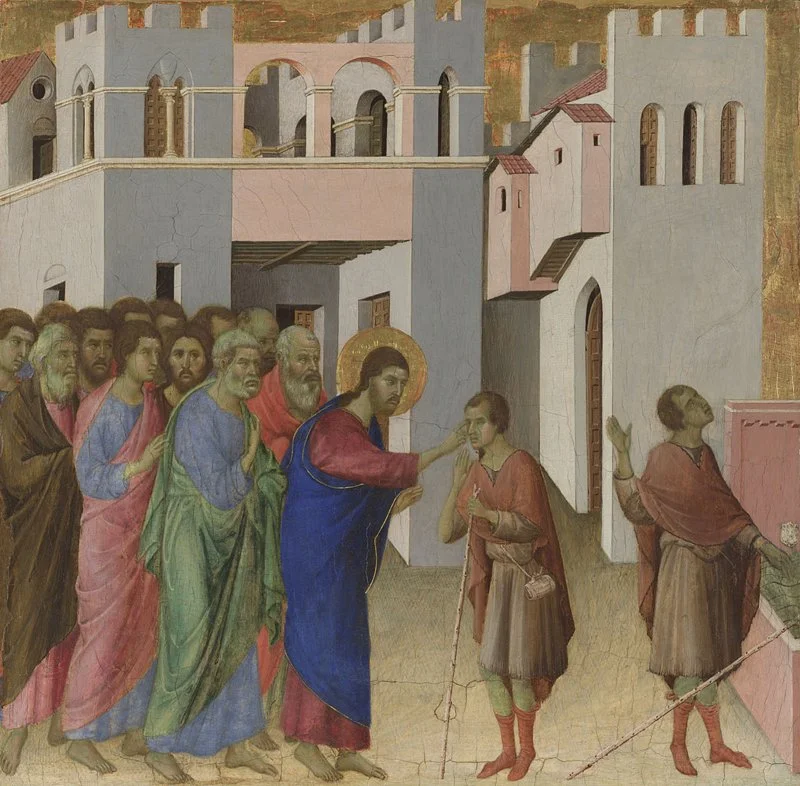
1. The Healing of the Man Born Blind — Duccio di Buoninsegna
Duccio created this small panel around 1307–11 as part of the enormous Maestà altarpiece for Siena Cathedral. It tells the story from John 9.
What I especially love is that Duccio shows the man twice.
In the center, Jesus reaches toward his eyes. At the far right, we see the same man again after washing in the pool of Siloam. His walking stick has been set aside. He looks upward. One painting holds both the before and the after. What a wonderful image for Ordinary Time!
So much of discipleship happens somewhere between those two figures. We are learning to see. Understanding something differently. Setting aside something we once needed. Noticing God in a place where we had missed God before.
Questions for worship or reflection:
What am I beginning to see differently?
Where might God be inviting me to look again?
What have I outgrown that I am ready to set down?
This would work beautifully with John 9, but I wouldn’t limit it to a Sunday when that passage is preached. It could accompany a theme of illumination, transformation, healing, or learning to see our neighbors more clearly.
.jpg)
2. Old Peasant Woman — Paula Modersohn-Becker
There is nothing grand about this portrait. And that is precisely why I think it belongs in Ordinary Time.
Paula Modersohn-Becker painted the elderly woman in 1907. The artist frequently painted the rural people she encountered around Worpswede in northern Germany, including people living in the local poorhouse. But look at the dignity she gives this woman. She doesn’t turn her into scenery. She asks us to see her.
Her forms are simplified. Her hands rest before her. There is a quietness about the image that asks us to stay rather than glance and move on.
The Detroit Institute of Arts notes that Modersohn-Becker gave this sitter an unusual sense of dignity and repose considering her marginalized position in society. Perhaps that’s another practice for Ordinary Time: Learning to really see people. Not for what they produce. Not for their status. Not for what they can do for us. Simply because they bear dignity.
Questions for worship or reflection:
Who do I pass without really seeing?
Where do I find dignity in this woman’s face, posture, and hands?
What changes when we allow ourselves to look at another person slowly?
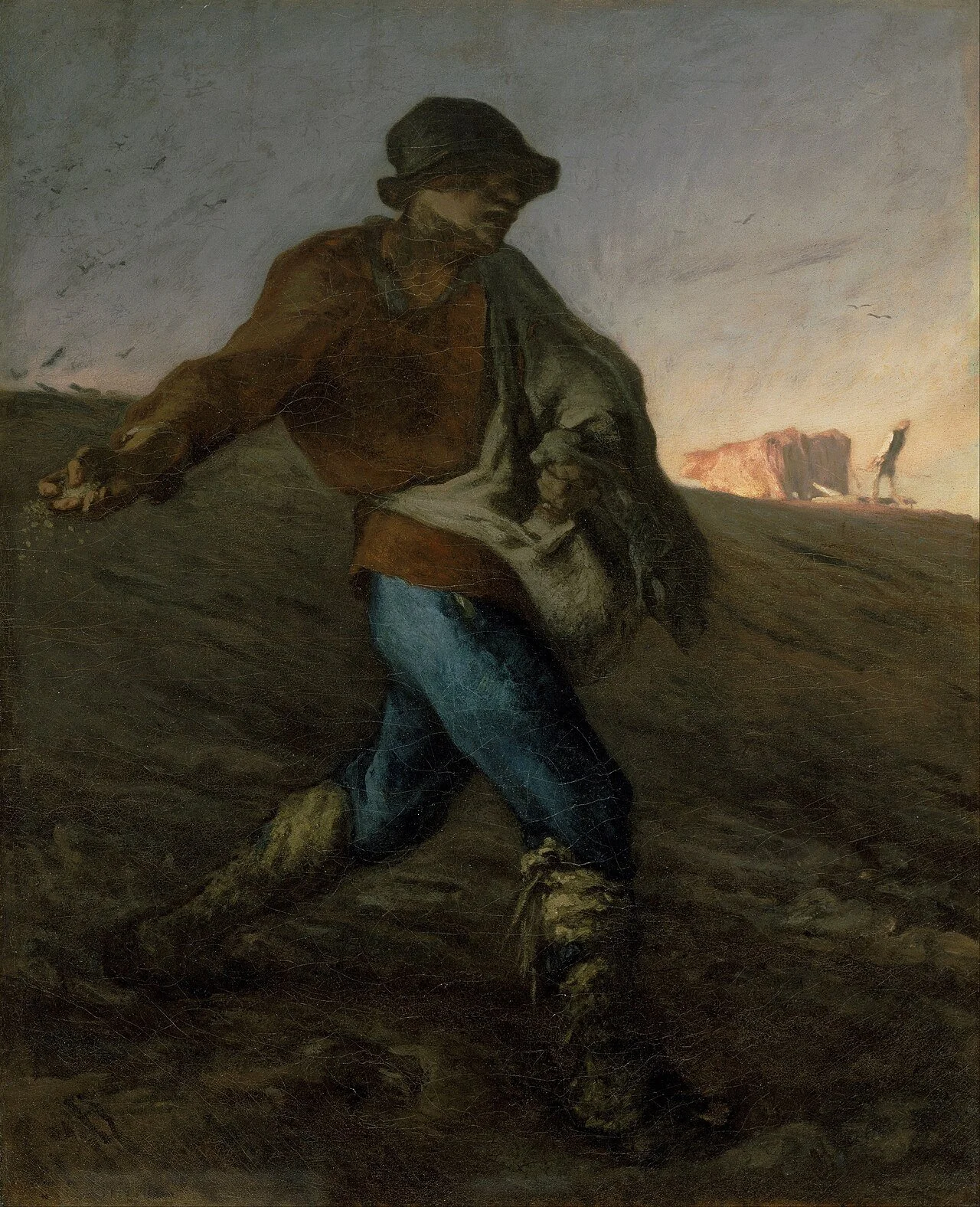
3. The Sower — Jean-François Millet
Few images feel more naturally connected to Ordinary Time than a person scattering seed. Millet returned again and again to the lives and work of rural people. His images of sowers, gleaners, farmers, and laborers elevated everyday agricultural work into subjects worthy of serious art.
A public-domain drawing of The Sower in the National Gallery of Artshows the figure caught mid-stride, one arm extended as seed is scattered.
For Christians, it’s almost impossible to look at a sower without hearing echoes of Jesus’ parables.
Some seed falls on the path.
Some among thorns.
Some on good soil.
And still the sower keeps sowing.
I especially like this image for fall because it complicates our usual harvest imagery. Fall isn’t only about gathering what has grown. It is also about trusting what comes next. Seeds disappear into soil before anything new becomes visible. That feels a lot like faith.
Questions for worship or reflection:
What am I planting without knowing the outcome?
Where am I being asked to trust slow growth?
What seeds have others planted in me?
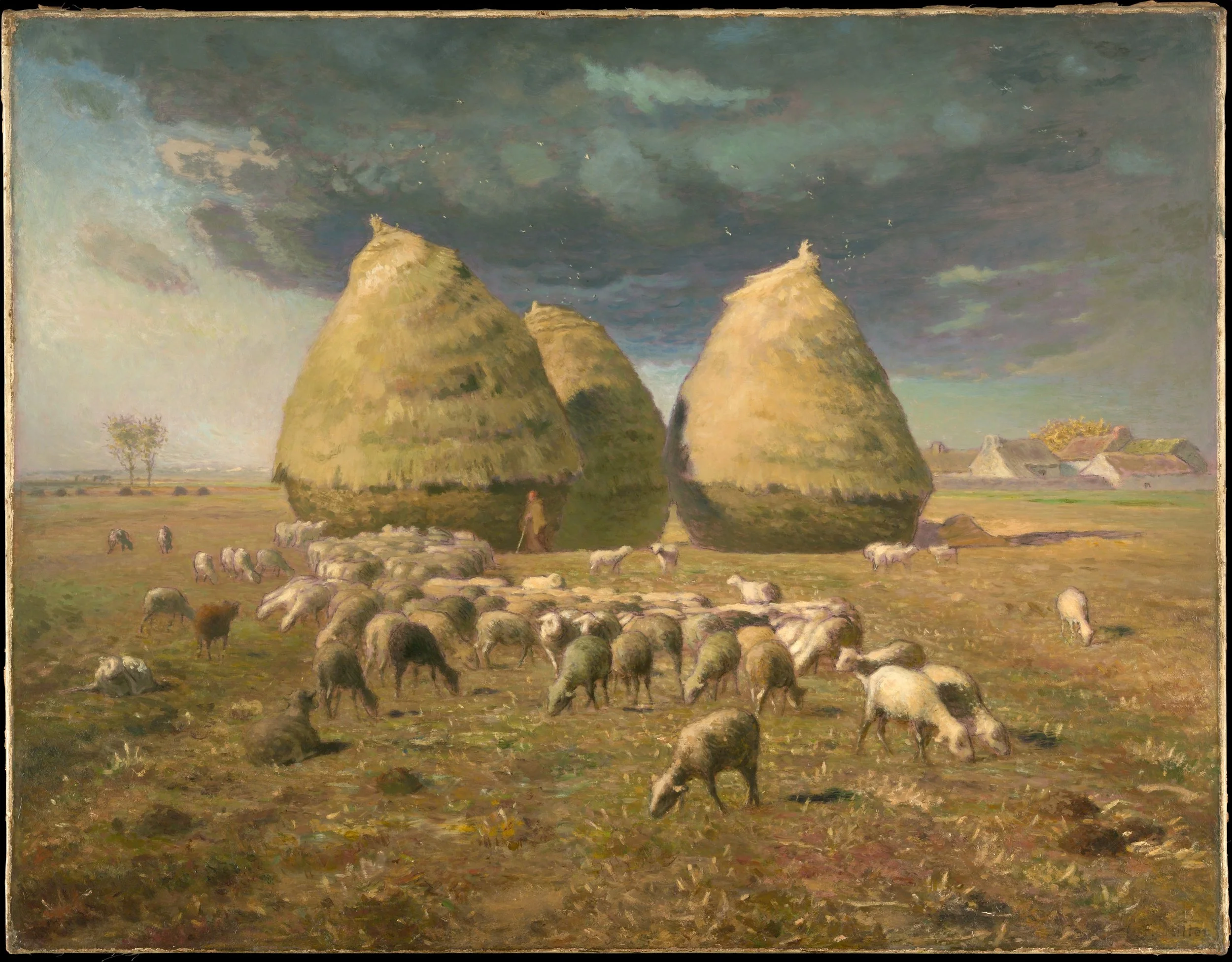
4. Haystacks: Autumn — Jean-François Millet
I would normally avoid using two works by the same artist in a short list, but this one offers such a different way of thinking about Ordinary Time that I would make an exception.
Millet painted Haystacks: Autumn around 1874 as part of a series depicting the four seasons. The work comes after the activity. The harvest is finished. The gleaners are gone. Haystacks sit heavily in the landscape while sheep graze nearby. The earth appears to be settling into what comes next.
There is something almost countercultural about showing this image in church.
We tend to celebrate beginnings: new programs, new ministries, new goals, new growth. But the natural world reminds us that there are also seasons for completion, such as for gathering. For acknowledging what has already been accomplished. And eventually, for rest.
Ordinary Time gives us room for all of it.
Questions for worship or reflection:
What has come to completion in this season?
What am I grateful to have gathered?
Where might I need to stop producing and simply receive?
Art Doesn’t Have to Illustrate the Sermon
This may be the most important thing I want to say. When we use art in worship, we don’t always have to make it explain something. A painting doesn’t need to function as a PowerPoint illustration for the sermon. Sometimes we can simply let people look.
Put the image on the screen before worship begins.
Print it in the bulletin or on its cover.
Project it during a time of silence.
Use it for visio divina.
Ask one good question and resist the urge to provide the answer.
Children can participate too. Ask them what they notice first. Ask what colors they see. Ask what they think happened five minutes before the scene—or what might happen next.
High-quality art gives us something to return to. The longer we look, the more there is to see!
A Thought to Carry With You
Churches have always used visual language: stained glass, architecture, textiles, sculpture, paintings, symbols, color, bread, water, light. Bringing great art into worship isn’t adding something foreign. It’s continuing a very old conversation.
Choose thoughtfully. Credit generously. Look slowly.

This reflection originally appeared in a longer form on our Substack. Our blog and Substack usually feature different articles, so consider following both for more thoughts on art, faith, creativity, and the things worth noticing.