Every year, as Advent approaches, churches begin to change.
The green of Ordinary Time gives way to purple or blue. Advent wreaths appear. Candles are lit. The sanctuary may look a little simpler, a little quieter, or perhaps more expectant.
These changes aren't simply seasonal decorating. They're visual reminders that we've entered a different part of the Christian story.
As an artist who has spent more than two decades creating clergy stoles and other liturgical art, I'm fascinated by the way color and symbols help communicate what words alone sometimes cannot.
And Advent is a particularly meaningful season for this.
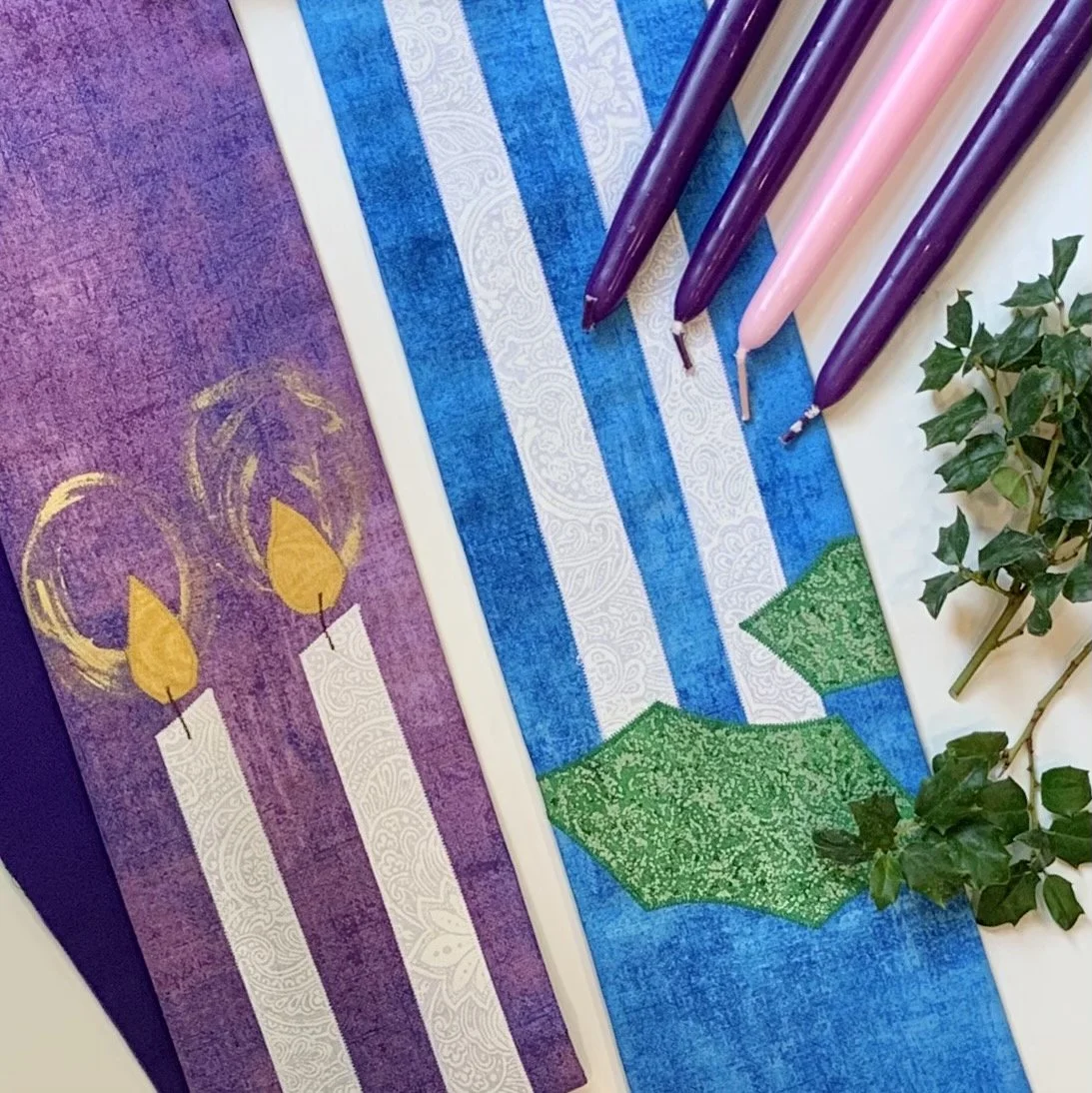
Why Do Churches Use Purple or Blue for Advent?
If you've visited different churches during Advent, you may have noticed that some use purple while others use blue. Both colors have meaningful traditions.
Purple has long been associated with preparation, penitence, and royalty. Historically, Advent included a stronger emphasis on repentance and spiritual readiness, much like Lent. Purple reflects that tradition while also pointing toward Christ as King. There's something fitting about a royal color appearing during a season when we prepare to celebrate a child born in a humble manger.
Blue is often associated with hope, expectation, and the promise of Christ's coming. Some Protestant denominations and congregations use blue to distinguish Advent from Lent, emphasizing the season's anticipation rather than its penitential character. Blue can also suggest the night sky, reminding us of waiting in darkness for the arrival of light.
Neither color is universally required. Traditions differ among denominations and congregations, and both colors offer meaningful ways to approach the season. What matters is that the color change helps us recognize that Advent is not simply an extension of Christmas. It is a season with its own purpose.
Why Advent Is Different from Christmas
This distinction is especially important in a culture where Christmas seems to begin earlier every year. By the time Advent arrives, we're already surrounded by Christmas music, decorations, shopping lists, and celebrations. There's much to enjoy in these traditions, but the church calendar invites us into a different rhythm.
Advent asks us to wait.
We remember the people who longed for the coming of the Messiah. We prepare to celebrate Christ's birth. And we look forward to Christ's coming again. It's a season of both remembering and anticipating.
That is why Advent stoles are traditionally purple or blue rather than the white and gold commonly used at Christmas. The colors help us experience the difference between preparation and celebration. When Christmas arrives and the sanctuary changes to white or gold, the visual transition becomes part of the story. We've moved from waiting to rejoicing. Without that contrast, we risk losing something meaningful about the journey.
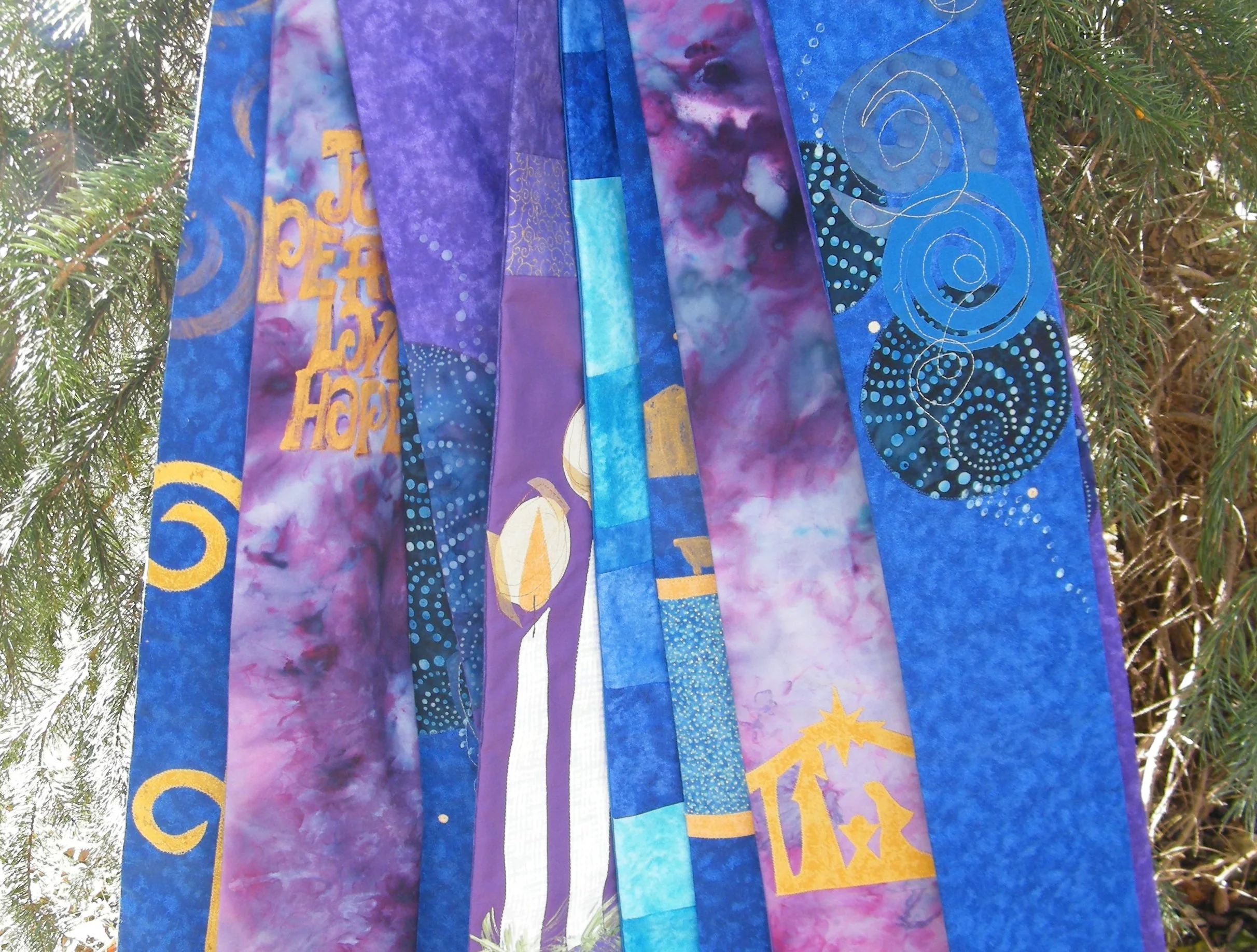
How Advent Stoles Tell the Story Visually
A clergy stole is more than a colorful addition to a pastor's clothing. In many Christian traditions, the stole is a sign of ordained ministry and the responsibilities of serving God's people. Its color connects the minister to the season of the church year. And when a stole includes Christian symbols, it can communicate even more.
Consider some of the images commonly associated with Advent.
Candles and light: The Advent wreath helps us mark the passing weeks as we move toward Christmas. Each additional flame offers a visible reminder of hope growing in a world that knows darkness.
Stars: A star can point toward God's guidance, the promise of Christ's coming, and the light that leads us forward.
The empty manger: Before it holds the Christ child, the manger represents readiness. It invites us to consider what it means to make room for Christ in our lives.
Evergreen branches: Their lasting color can remind us of God's faithfulness and the promise of life, even in seasons that appear dormant.
The Jesse Tree: Rooted in Isaiah 11:1, this image connects the coming of Christ to the long story of God's promises and the family line of Jesse.
These symbols don't need to appear together. In fact, sometimes a single thoughtfully chosen image communicates more clearly than an elaborate collection. The purpose isn't to fill every available space with decoration. It's to help worshipers recognize and remember the story being told.
Why Visual Connections Matter in Worship
As a former art teacher, I've always believed that people learn and remember in different ways. Some of us connect most readily with spoken words. Others respond to music, movement, or visual imagery.
In worship, these experiences can reinforce one another.
Imagine a child watching the Advent wreath grow brighter each Sunday. They may not understand every word of the sermon, but they can see that something is changing. Or consider someone who notices a deep blue stole with a single star. That image might stay with them long after the service has ended. Visual symbols give us something to recognize, wonder about, and remember. They can also connect generations. A child and an adult may notice different things in the same symbol, but both can participate in its meaning.
I think that's one of the gifts of liturgical art. It makes room for people to engage with the story through more than one sense.

The Value of Simplicity During Advent
Advent is an interesting season for an artist because its message often calls for restraint.
We live in a culture that encourages us to add more during December. More decorations. More activities. More celebrations.
But Advent offers a different invitation.
Perhaps the most meaningful visual expression of the season is a single candle, a simple star, or a quiet stretch of blue fabric.
These images leave room for reflection. They remind us that not every story needs to be told all at once. The church calendar unfolds gradually, and our visual surroundings can help us experience that unfolding.
As an artist, I find this particularly compelling. Sometimes the most important creative decision isn't what to add, but what to leave out.
Preparing Our Eyes and Hearts
When we think about preparing for Advent, we often focus on worship planning, music selections, scripture readings, and seasonal activities. All of those things matter! But I hope we'll also pay attention to what people see when they enter the sanctuary.
What do the colors communicate? What symbols are present? Do they invite curiosity? Can children recognize them? Do they help distinguish Advent from Christmas? A stole, an Advent wreath, or a simple banner may seem like a small part of the worship experience. Yet these visual elements can quietly reinforce the message week after week. And perhaps that's especially important during Advent.
In a season when so much competes for our attention, the church offers us an invitation to notice something different.
To watch.
To wait.
To prepare.
The purple or blue stole worn by a pastor is one small part of that invitation. It reminds us that we're living within a story that has been unfolding for generations, and that the waiting itself has meaning.
This Advent, I invite you to look around your worship space with fresh eyes. What colors and symbols do you notice? What stories are they telling? And how might they help you make room for the wonder of Christmas?
P.S. To better understand our contemporary stoles, read this post about the making of one particular Advent stole.